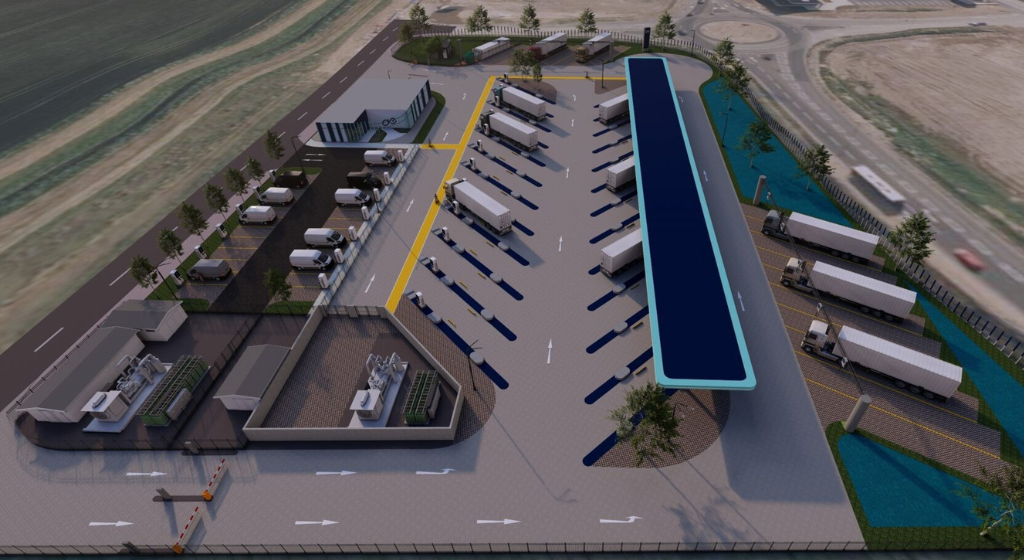
The transition to sustainable transport has given rise to modern multi-energy hubs. These are complex facilities combining Electric Vehicle Supply Equipment (EVSE) infrastructure, renewable liquid-fuel pumps, hydrogen dispensers, battery energy storage systems (BESS), and photovoltaic (PV) generation.
However, as these facilities grow in scale, a critical bottleneck has emerged: these advanced technologies operate on entirely siloed digital systems. To scale their business effectively, operators must move beyond legacy software and embrace the new era of AI agentic systems.
In a multi-energy hub, complexity comes not only from the number of technologies on site but also from the way these technologies communicate and operate as separate digital environments. Each subsystem may expose different data formats, telemetry granularity, error semantics, and communication protocols, such as OCPP, Modbus, and OEM-specific APIs.
Traditional operational software architectures can therefore become another layer of fragmentation. Standard Energy Management Systems (EMS) or Charging Station Management Systems (CSMS), may support individual parts of the site well, but they are not always designed to create a unified operational layer.
As a result, they suffer from four core limitations:
For operators, this technological fragmentation translates directly to avoidable downtime due to late fault detection, suboptimal energy dispatch, increased operational complexity, and significant difficulty scaling hubs beyond simple EV-only layouts.
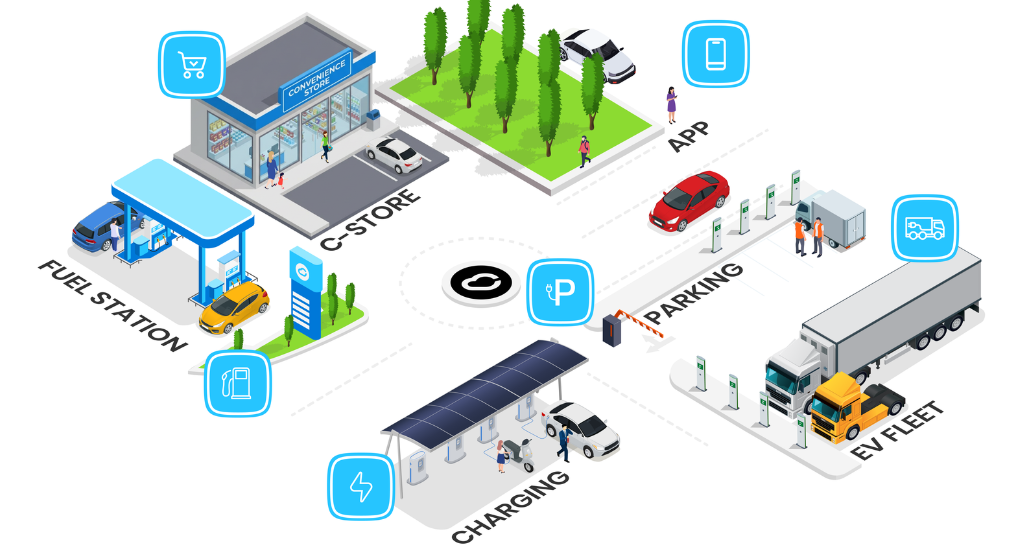
To resolve these challenges, the industry requires an integrated operational intelligence architecture capable of multi-energy reasoning, predictive diagnostics, and operator-facing guidance.
By deploying a coordinated multi-agent system, operators can resolve insight fragmentation through a layered, highly intelligent architecture.
Here is how AI agents are transforming multi-energy hub management:
Before AI can make intelligent decisions, it needs a single ground truth. Advanced systems utilise a unified data-communication layer to map all subsystem data into a canonical technical schema. This enables multi-protocol ingestion and automated time-alignment, validating and structuring all relevant telemetry, from EV and hydrogen systems to site-control signals, into a single, harmonised computational environment.
Instead of waiting for a component to fail, predictive maintenance AI agents constantly monitor the harmonised multi-vector telemetry.
Various patterns may be detected across operations and reveal risks that would be difficult to identify from a single subsystem alone. When a risk is identified, the agent generates automated diagnostic playbooks and escalation bundles. Those provide structured assessments and probable root causes to support technician workflows.
As multi-energy hubs become more complex, operators do not only need more data, but clearer guidance on what it means. Therefore, the true power of an agentic system lies in its ability to synthesise data into actionable human insights.
An advisory AI agent can act as a decision orchestration layer by utilising a natural-language interface. This helps to provide operators with structured, explainable recommendations for where human attention is needed. Human oversight remains essential, but intelligent support can help teams assess situations quicker and further support operational safety.
Rather than relying on a single, monolithic optimisation engine, future systems will need to support several specialised tasks at the same time. Forecasting demand, managing tariff and price optimisation, and energy and load balancing all require different types of analysis. The advisory agent has the capacity to seamlessly integrate outputs in a more modular approach and build complex reasoning chains with clear interpretability.
As commercial transport continues to decarbonise, the infrastructure supporting it must become fundamentally smarter.
By shifting from fragmented, reactive management tools to coordinated multi-agent systems, multi-energy hub operators can eliminate blind spots, proactively manage asset health, and optimise complex energy ecosystems with unprecedented clarity.
However, transitioning to this new reality requires more than just a theoretical architecture.
It demands a robust, field-tested technology ecosystem. This is where forward-thinking technology companies like Cloudics step in to bridge the gap between operational complexity and real-time control.
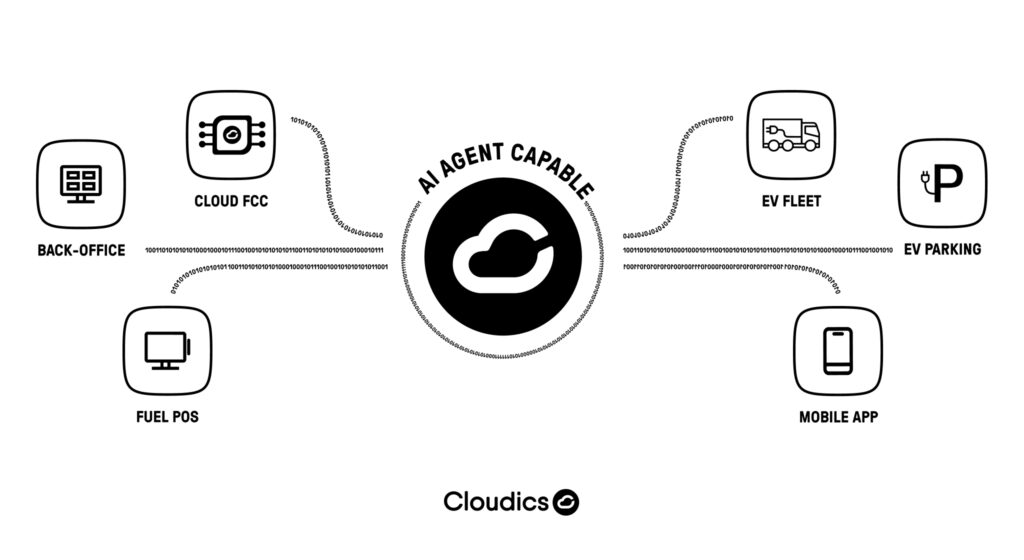
The platform resolves data fragmentation by providing the digital backbone for these next-generation hubs. Cloudics approaches this challenge from the perspective of everyday practical site operations. The platform reduces fragmentation, improves visibility and makes complex site operations easier to manage as networks scale.
Here is how the Cloudics AI ecosystem is bringing this vision to life:
By embedding these principles into their operations, multi-energy hubs can finally scale without the growing pains of disjointed software.
With Cloudics, operators can leave the technical complexity behind and focus on what matters most: delivering reliable, profitable, and sustainable energy solutions for the next generation of transport.
For more information, please contact:
info@cloudics.com
+372 628 0000
Cloudics
Here to Streamline Your Business
cloudics.com