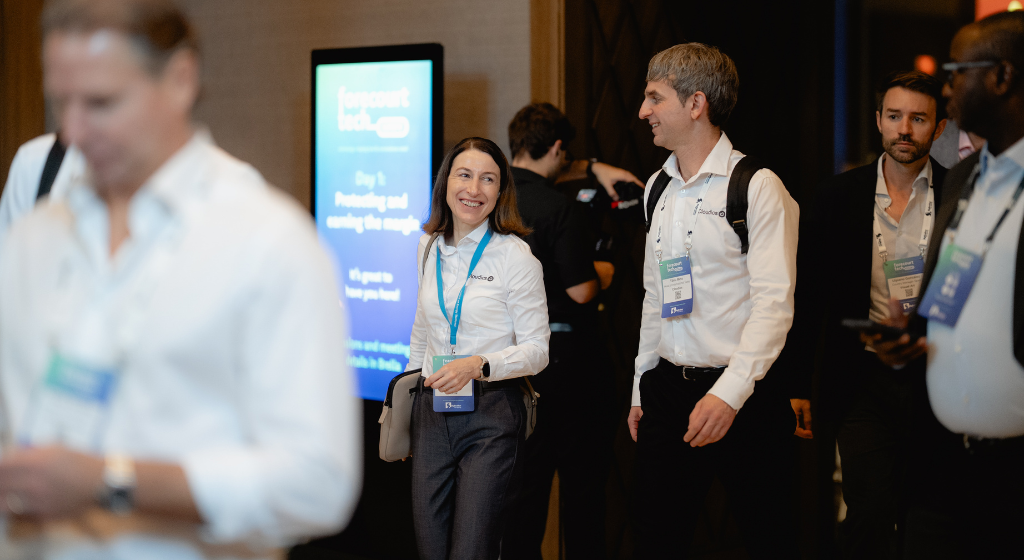
After two days of discussions with fuel retailers and mobility providers at Forecourttech ’26, one thing became clear: while forecourt markets are evolving at different speeds, the industry’s biggest challenges are becoming increasingly similar.
Operators everywhere are looking for ways to strengthen customer relationships, make better use of their data and stay in control of the technology choices shaping their business.
Representing Cloudics at Forecourttech ’26, Mai Mitt and Tõnu Mets gathered insights from across the event. Here are their key takeaways.
As fuel margins remain under pressure and customer habits continue to evolve, retailers are increasingly focused on one critical question: how do you turn a single transaction into a long-term customer relationship?
Whether a customer arrives to refuel, charge an EV, grab a coffee or make a purchase in the convenience store, every interaction is becoming part of a broader loyalty strategy. Retailers want a better understanding of customer behaviour, more personalised offers and stronger engagement across every touchpoint.
The challenge is that loyalty cannot exist in isolation. To understand customers, operators need to connect data from payments, fuelling, retail purchases and digital services.
This aligns closely with the direction we have taken at Cloudics. A connected ecosystem allows operators to build a more complete view of customer interactions, creating opportunities for personalised experiences and higher customer retention. As discussions at Forecourttech showed, customer insight can be just as valuable as the transaction itself.
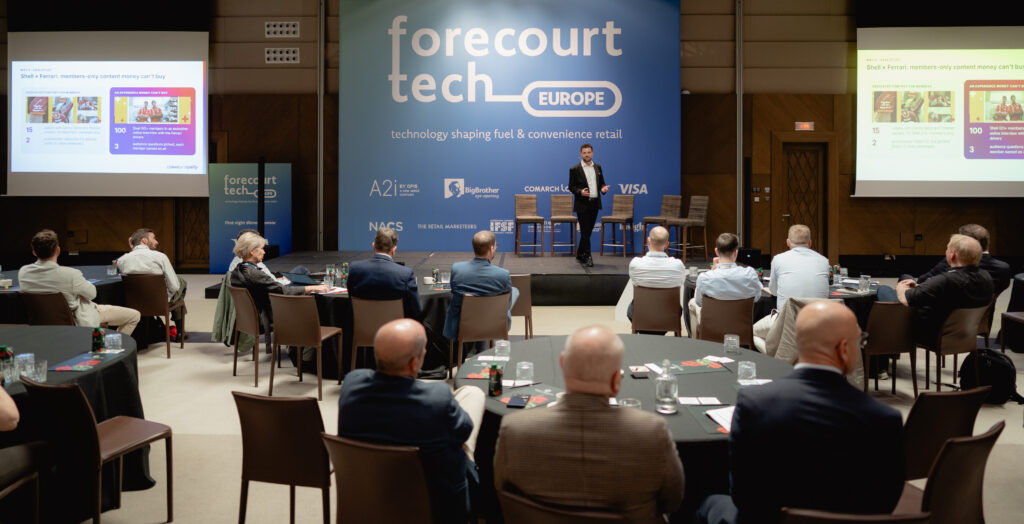
Another recurring theme was the growing divergence between markets.
In countries such as Germany, traditional fuel demand is gradually declining as new energy solutions become more widely adopted. Meanwhile, several Southern and South-Eastern European markets continue to see growing fuel demand and ongoing network expansion.
For operators, this means there is no universal roadmap for the future.
Whether operators are optimising existing networks, adding new energy services or expanding their retail footprint, the challenge is the same: technology must be able to evolve with the business. Open, cloud-native platforms provide the flexibility to support changing operating models, new technologies and future growth without requiring major infrastructure changes.
The conversations at Forecourttech reinforced why we’ve invested so heavily in cloud-based infrastructure and open integrations.
One of the most interesting observations from Forecourttech was how differently customers interact with the forecourt depending on their generation.
Many younger consumers expect fast, self-service experiences and digital convenience as the default. Some have never used a traditional fuel nozzle but feel completely comfortable plugging in an EV, managing payments from a mobile device and completing transactions independently.
At the same time, many customers still value traditional service models and familiar forecourt experiences.
For retailers, this creates a balancing act. The goal is not to choose between attended and unattended service, but to provide both in a way that feels natural for different customer groups.
Technology plays a key role in making this possible. From pre-payment and post-payment fuelling to flexible payment journeys and digital self-service experiences, retailers need systems that support different customer preferences without adding complexity to daily operations.
The businesses that succeed will be those that can deliver convenience and automation while also continuing to serve customers who prefer a more traditional experience.
Perhaps the most consistent technology-related message throughout the event was the growing demand for openness.
Retailers want ownership of their data and the freedom to choose the technologies and partners that best support their business.
As competition increases, future success will depend on how quickly operators can introduce new services, integrate new technologies and respond to changing customer expectations.
Achieving that level of agility requires connected, interoperable systems.
This demand for openness closely reflects the direction we have taken at Cloudics. We believe operators should be able to connect dispensers, payments, retail systems, wetstock management, loyalty programmes and digital services into a single ecosystem while retaining the freedom to expand and evolve over time. The conversations at Forecourttech confirmed that more and more retailers share that view.
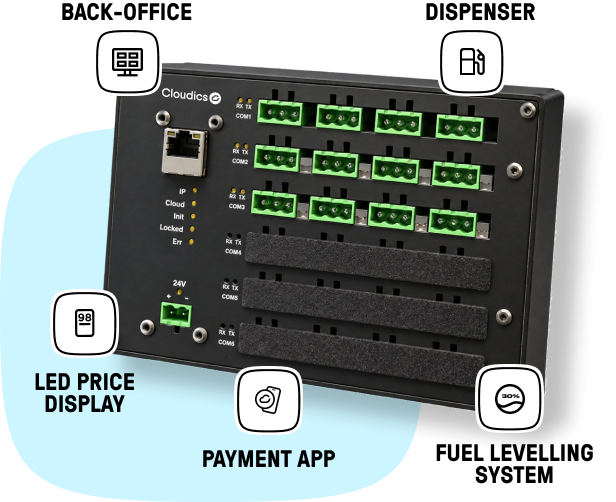
The trends discussed at Forecourttech ’26 reinforce the need for technology that connects every part of the forecourt operation. At Cloudics, our focus is on helping retailers manage fuel sales, payments and back-office processes through one integrated platform.
Many of the challenges discussed at Forecourttech ’26 are reflected in the solutions we continue to develop at Cloudics. You can explore the latest additions to our platform in more detail here.
Together, these solutions help retailers adapt to changing customer needs while maintaining visibility and control across the forecourt operations.
If there was one overarching message from Forecourttech ’26, it was that the future of forecourt retail will be shaped by customer experience just as much as by energy sales.
Loyalty, personalisation, operational agility and digital services are becoming key sources of competitive advantage. The winners will not simply be those selling fuel or electricity, but those creating the most compelling and convenient customer journeys around them.
Thank you to everyone who contributed to making Forecourttech ’26 such a valuable event. We look forward to continuing these conversations now and reconnecting with many of you next year.
Mai Mitt
Head of Sales and Marketing Department
+372 50 70 199
mai@cloudics.com


Tõnu Mets
Head of Business Development
+372 51 15 236
tonu@cloudics.com
Cloudics
Here to Streamline Business
Transform any physical or digital touchpoint into an instant conversion driver.
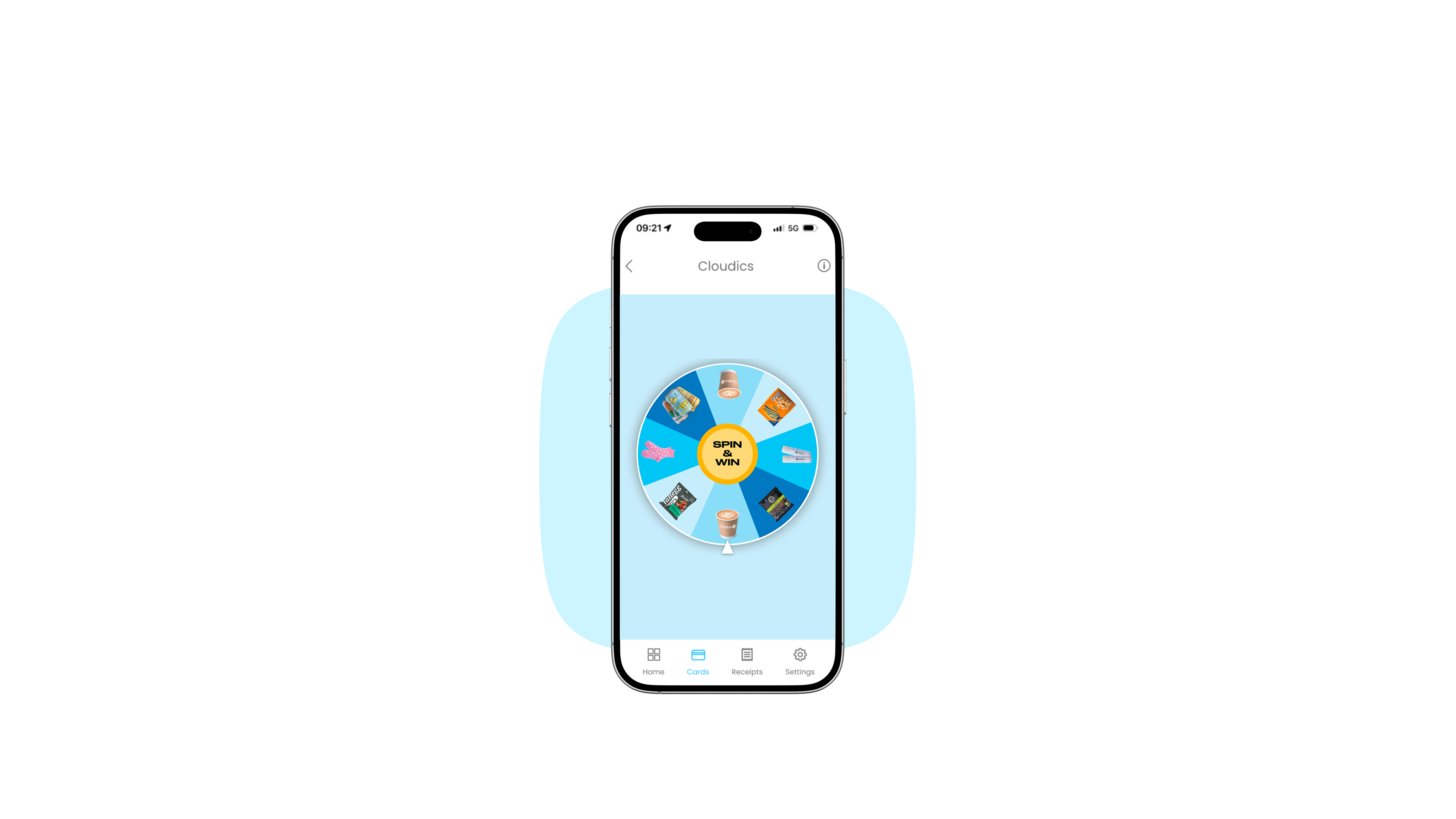
Gamification can be used in mobile app, in-store POS, SCO, and many more.