The EV charging market is scaling fast, but the real challenge is no longer simply adding more chargers.
What does it take to grow when expansion alone is no longer enough? How should operators think about grid constraints, heavy-duty charging, interoperability and the economics of every charging site?
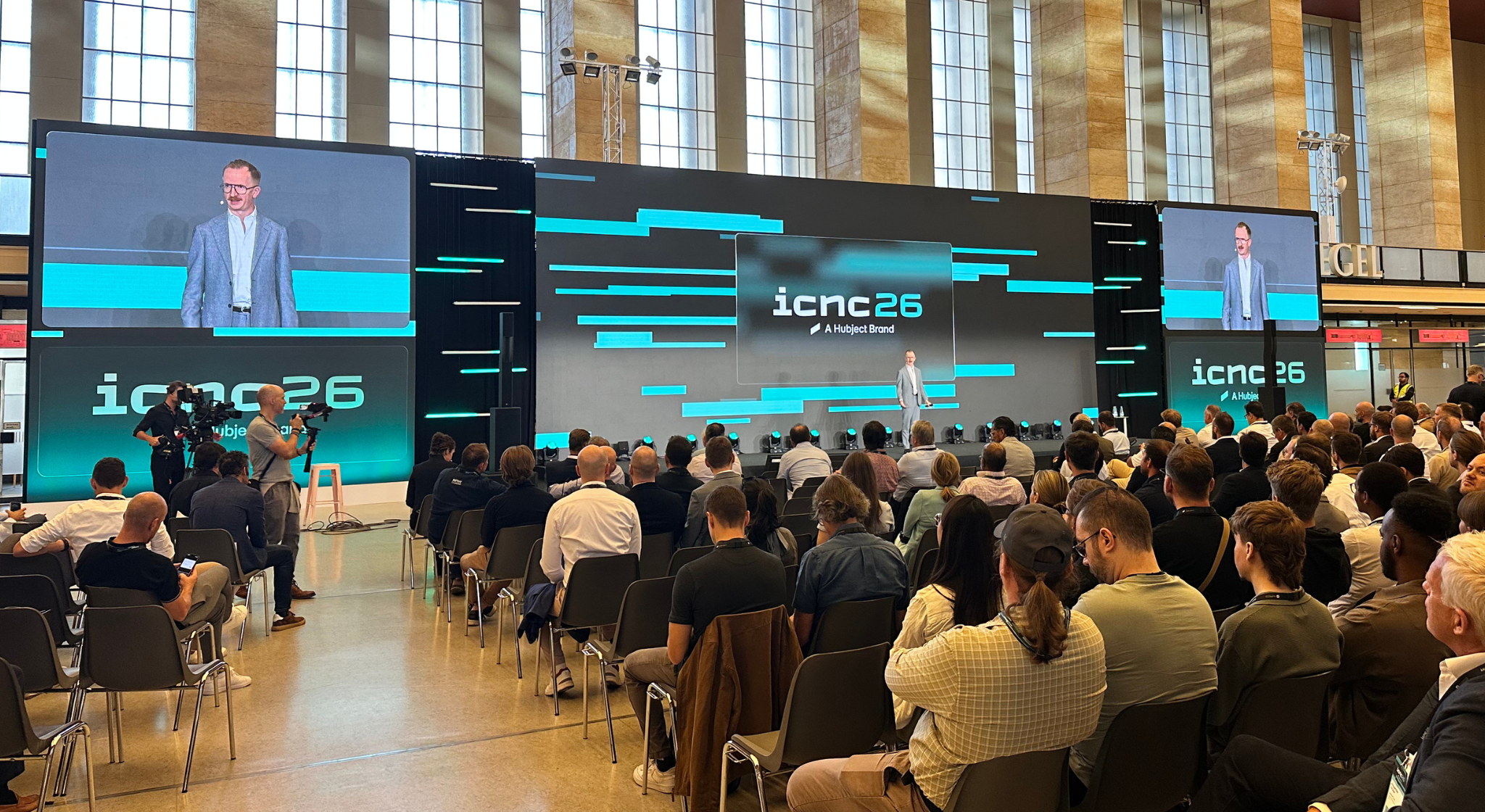
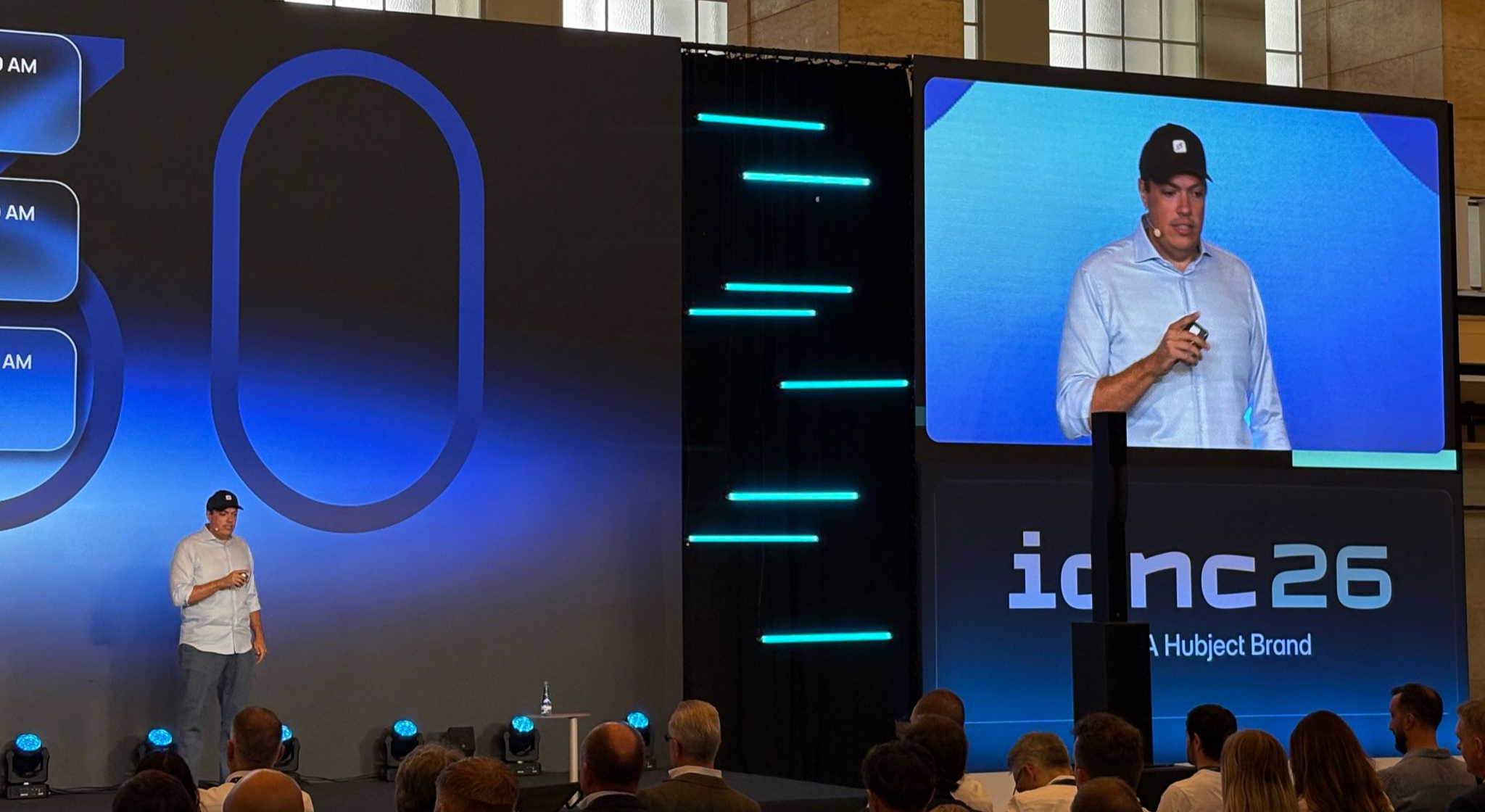
Our Head of International Sales, Tõnu Mets, joined industry leaders at ICNC26 to explore exactly these questions.
We’ve gathered his key takeaways on what the next phase of electric mobility means for operators, fleets and the software platforms supporting them.
One of the clearest messages from ICNC26 was that the eMobility market is entering a more selective phase. As Orlin Radev, CEO of AMPECO, put it in his keynote, “Get Big, Get Niche or Get Out,” generic one-size-fits-all strategies are becoming harder to sustain.
For operators, this means the middle ground is narrowing.
The strongest positions are increasingly built either through significant scale or through deep specialization in areas such as heavy-duty fleets, hospitality charging or depot logistics.
In other words, growth still matters, but so do a clear operational advantage and a hard-to-replicate business model.
The way charging businesses are valued is changing. Steven E. Janßen from Strategy& / PwC highlighted that investors are looking beyond the number of installed charge points.
Metrics such as uptime, utilisation, energy throughput, secured grid capacity, and recurring software revenue are increasingly important indicators of long-term value.
The takeaway? More chargers do not automatically mean a stronger charging business.
The focus is shifting toward how efficiently those assets are operated, how well they are utilised, and how much value the software layer can create around them.
Heavy-duty electrification is accelerating, with the EU electric truck market growing by more than 47% year over year. But scaling truck charging brings a very different set of challenges than passenger EVs—especially around grid capacity, downtime, and route predictability.
Dedicated corridors and en-route hubs:
High-power charging networks along TEN-T (Trans-European Transport Network) corridors are becoming essential for long-haul transport. Operators such as Milence, GRIDSERVE and Atlante are combining megawatt-scale charging with locations designed specifically around the needs of truck drivers and fleet operations.
Semi-public depot sharing:
Private depots are often underused at certain times of day. As Kasper Thybo from Spirii highlighted through the Spirii x Daimler Truck TruckCharge initiative, opening this capacity to trusted third-party fleets can create an additional revenue stream for depot owners while helping smaller fleets access reliable charging infrastructure.
Pre-bookable charging slots:
For commercial fleets, waiting for a charger isn’t just inconvenient—it can disrupt an entire route. Because truck operations are closely tied to regulated driving and rest periods, reserving charging capacity in advance is becoming a critical part of the charging experience.
The broader takeaway: heavy-duty charging has to be predictable by design. Power alone is not enough. Fleet operators need confidence that the right capacity will be available at the right place and the right time.
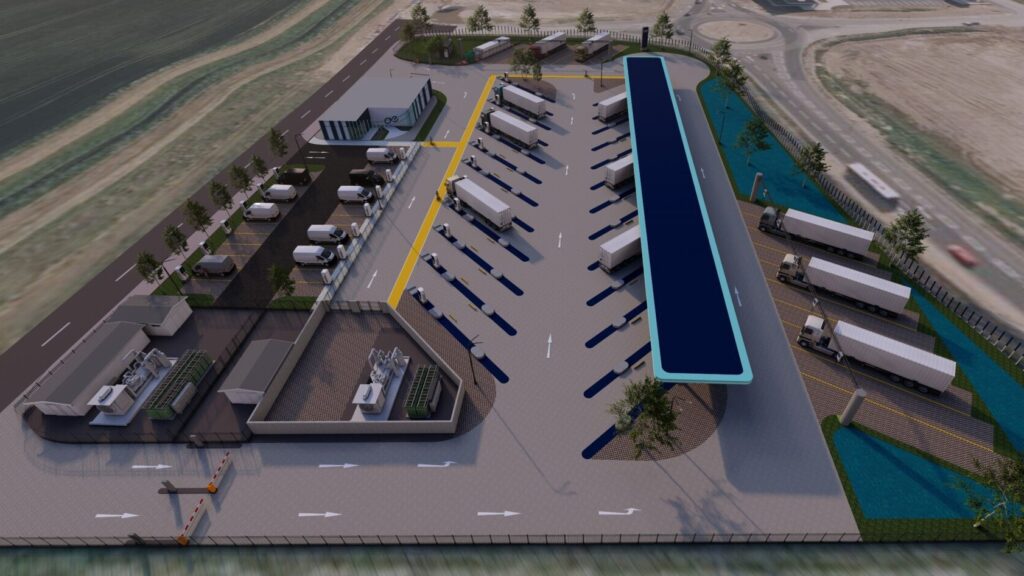
As charging hubs move into megawatt territory, traditional load management is no longer enough. The challenge isn’t simply supplying more power; it is coordinating that power intelligently across the grid, charging hardware, energy prices, and operational priorities.
Hybrid edge and cloud architecture:
Cloud systems are well suited for fleet scheduling, dynamic tariffs and energy market optimization. But when it comes to grid safety, speed matters. Critical load shedding needs to happen locally at the edge, within milliseconds, to prevent transformer overloads and costly demand peaks.
Centralized DC bus architecture:
Lorenzo Neckermann from Infypower demonstrated how shared DC infrastructure can distribute power dynamically between charging bays instead of relying on isolated charger units. It also enables more direct integration with BESS and solar PV, reducing conversion losses and potentially lowering site CapEx.
Independent orchestration layers:
Okke van ’t Verlaat, CTO of ihomer, highlighted the growing role of orchestration layers above the traditional CPMS. These systems continuously balance grid limits, departure requirements, energy prices and CPO business rules to decide where and when power should flow.
The key takeaway is that smart charging is becoming a coordination problem as much as a charging problem. As power demand grows, successful operations will depend on how well local control, cloud intelligence and the wider energy ecosystem work together.
Fleet electrification is no longer driven by sustainability targets alone. The economics are becoming increasingly difficult to ignore.
According to data presented in the EY & Eurelectric study “Fleet forward: powering the transition to electric mobility,” corporate fleets account for around 60% of all new vehicle registrations in Europe. Electrifying those fleets could unlock an estimated €246 billion in cumulative OPEX savings by 2030.
The operational case is already strengthening.
EVs can deliver 10–20% lower operating costs than internal combustion engine vehicles, largely thanks to reduced servicing needs and lower energy costs per kilometre.
The bigger challenge remains upfront investment.
Vehicle costs, grid connections and charging infrastructure can still create a significant CapEx barrier, particularly for larger fleets and depot-based operations.
That means fleet acceleration will depend on more than simply replacing vehicles.
Smart depot charging, supportive policy frameworks and standardised eRoaming will all play a critical role in making electrification commercially viable at scale.
The takeaway? The question is increasingly shifting from “Should we electrify?” to “How do we electrify in the most operationally and economically efficient way?”
The next phase of electric mobility will reward those who can operate smarter, not just grow faster. For different players in the ecosystem, that means focusing on different priorities:
For CPOs and infrastructure investors:
Look beyond charger counts. Energy throughput, utilisation, uptime and long-term grid capacity are becoming more important indicators of value.
Infrastructure choices should also support future flexibility, including BESS, solar integration and more dynamic power distribution.
For commercial fleet operators:
Move from reactive charging to proactive energy management. Smarter depot charging, pre-bookable charging slots and even semi-public depot sharing can improve predictability, reduce downtime and make better use of existing infrastructure.
For software and CSMS providers:
Build for a more complex operating environment. Local edge control is becoming increasingly important for grid safety, while cloud-based orchestration remains essential for pricing, scheduling, roaming and fleet-level optimisation. The two need to work together seamlessly.
The direction of travel is clear: EV charging is becoming more complex, more connected and more operationally demanding. Scaling successfully will require more than chargers alone.
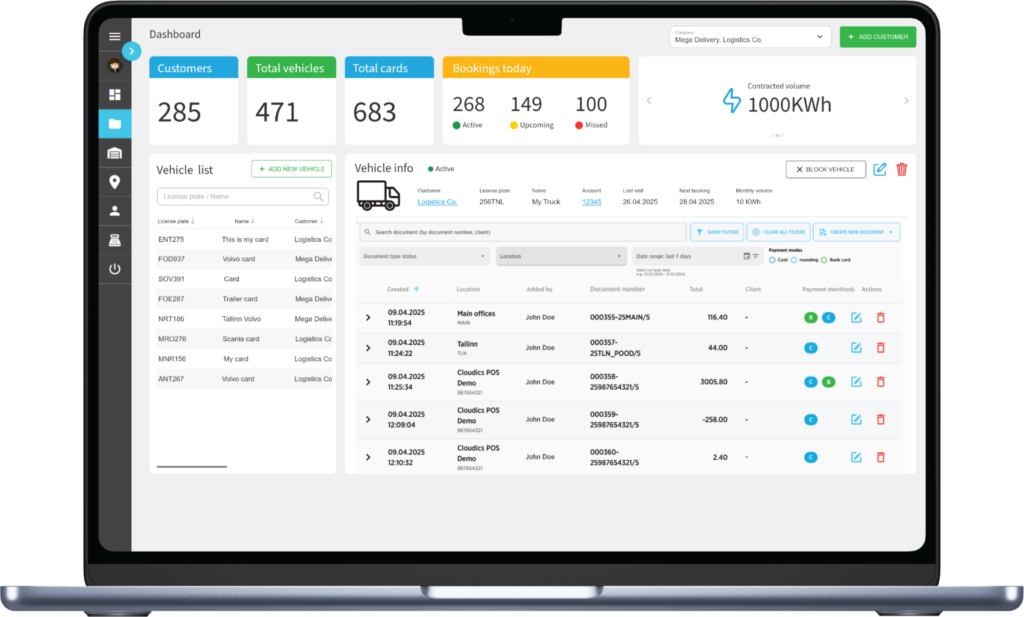
Operators need software that brings infrastructure, energy, pricing, payments, and fleet operations together.
That is exactly where Cloudics comes in.
Our platform gives operators one intelligent, integrated environment for managing charging stations, dynamic pricing, load balancing and integrations with retail, fleet and energy systems.
Whether you already operate an EV charging network or are planning your first site, the goal is the same: less complexity, more control and a charging operation that is ready to scale.
And with that, we wrap up our key takeaways from ICNC26.
Thanks to everyone behind the event and to all the industry experts who shared their perspectives. See you at ICNC27!

Tõnu Mets
Head of Business Development
+372 51 15 236
tonu.mets@cloudics.com
Cloudics
Here to Streamline Business
Transform any physical or digital touchpoint into an instant conversion driver.

Gamification can be used in mobile app, in-store POS, SCO, and many more.