
A flower wholesaler cannot wait an extra day for delivery. The product loses freshness, the customer loses value and the sale may be lost entirely. A car manufacturer using just-in-time production cannot simply wait for missing parts. If the delivery window is missed, production slows down or stops.
What looks like one delayed truck quickly becomes a much larger operational problem.Recent years have made this clear.
Brexit created border friction and delays. The Ever Given blockage in the Suez Canal disrupted shipping worldwide. COVID-19 caused labour shortages, capacity shocks, empty shelves and rising costs.
The lesson is simple: when logistics flow stops, the impact spreads fast. Electric heavy goods vehicles are now becoming part of this same conversation.
The shift is being driven by both regulation and OEM investment. In Europe, heavy-duty vehicle CO₂ targets are moving from a 15% reduction in 2025 to 45% in 2030, 65% in 2035 and 90% in 2040.
Major manufacturers such as Volvo Trucks, Daimler Truck, Scania, MAN, DAF and Renault Trucks are already building the next generation of electric truck fleets. This is good progress.
But the vehicle is only one part of the system.
Consumer EV charging already shows what can go wrong. Availability in apps is not always accurate. Chargers can be occupied, blocked, faulty or slower than expected. Different operators use different systems, and the experience depends heavily on who owns and manages the charger.
For passenger cars, that creates inconvenience.
For heavy goods vehicles, it can create supply chain failure. A truck that cannot get enough power cannot move. A truck that cannot move misses its slot.
A missed slot can affect the next route, the next warehouse, the next driver shift and the next customer promise. No power means no movement. No movement means a broken supply chain flow.
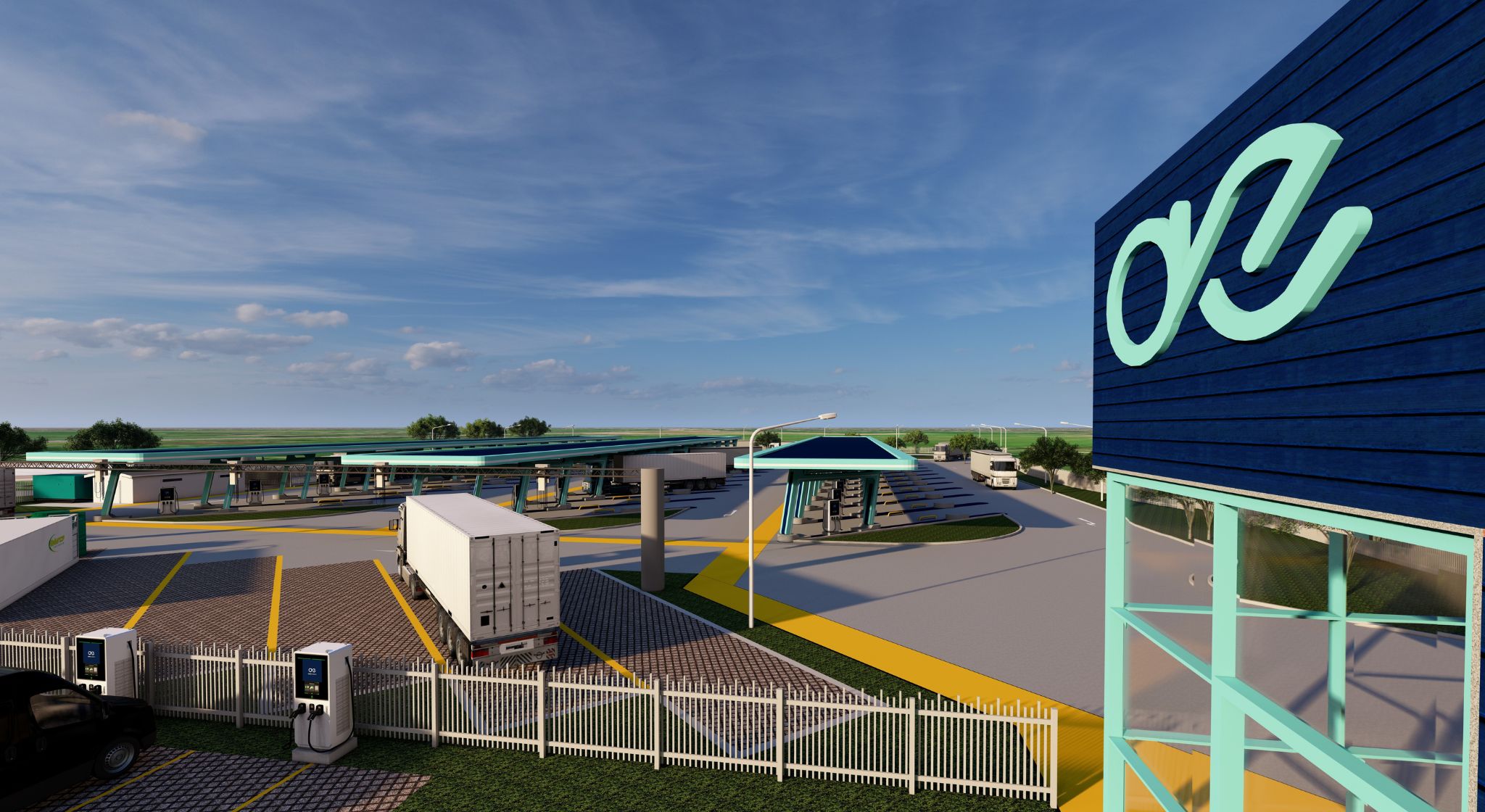
It must be planned as part of logistics operations.
The issue is not only where chargers are placed. It is also how power is allocated. Many sites do not have enough grid capacity for several high-power truck chargers. Upgrades can require new cabling, substation work, permits and long construction timelines. In some cases, the charger itself can be installed faster than the power connection behind it.
That changes the role of charging management.
In the diesel world, refuelling is usually fast and predictable. In the EV HGV world, charging must be scheduled, prioritised and monitored. Operators need to know which vehicle charges when, how much power it receives and whether it will be ready for the next movement.
The charging location becomes part of the supply chain.
Cloudics helps businesses manage this complexity by integrating parking, EV charging, payments, and operational control into a single platform. The goal is not to add another system to manage. The goal is to make the business easier to run.
As electric truck adoption grows, reliable charging will become a competitive advantage. Companies that can guarantee power can also better guarantee deliveries.
And in logistics, that is what matters most.
For more information, contact:
info@cloudics.com
+372 628 0000
Cloudics
Here to Streamline Your Business
cloudics.com

Each week brings a fresh perspective on where our industry is heading. The predictions are endless, from the game-changing potential of solid-state batteries to the emergence of new fuels that could replace petrol and the role of HVO as a temporary fix. But when we speak with retailers, the message is consistent: ”We need to figure out how to serve everyone.”
Last-mile delivery is now moving to alternative fuels, trucks are going electric, and your standard everyday EV customer is calculating their kilometres to understand where they can go without running out of juice.
So, they are looking for a reason to visit you – let’s give them one.
Access to home charging or installing a personal charger is a luxury not available to everyone. Moreover, purchasing a brand-new car remains out of reach for many. Fast charging will be essential, and the few chargers available in supermarket parking lots won’t be enough.
At Cloudics, we believe that the future of energy stations lies in providing dedicated areas equipped with high-speed chargers, comfortable convenience zones, and additional parking spaces, all thoughtfully positioned alongside traditional refuelling stations to meet diverse customer needs and encourage engagement with other profit areas.
On its own, EV charging often results in losses. However, when you link it with a range of other services, you create profit opportunities. You might think you’ve already experimented with this by offering food and beverages, only to find drivers in their cars, glued to Netflix.
The problem isn’t the idea—it’s the execution.
When using a third-party charger managed by an external CPO app, it probably wasn’t fully integrated into your business. Chargers could be located inconveniently far from your store, or the overall customer journey might not provide enough reasons for them to engage with your additional value-added services.
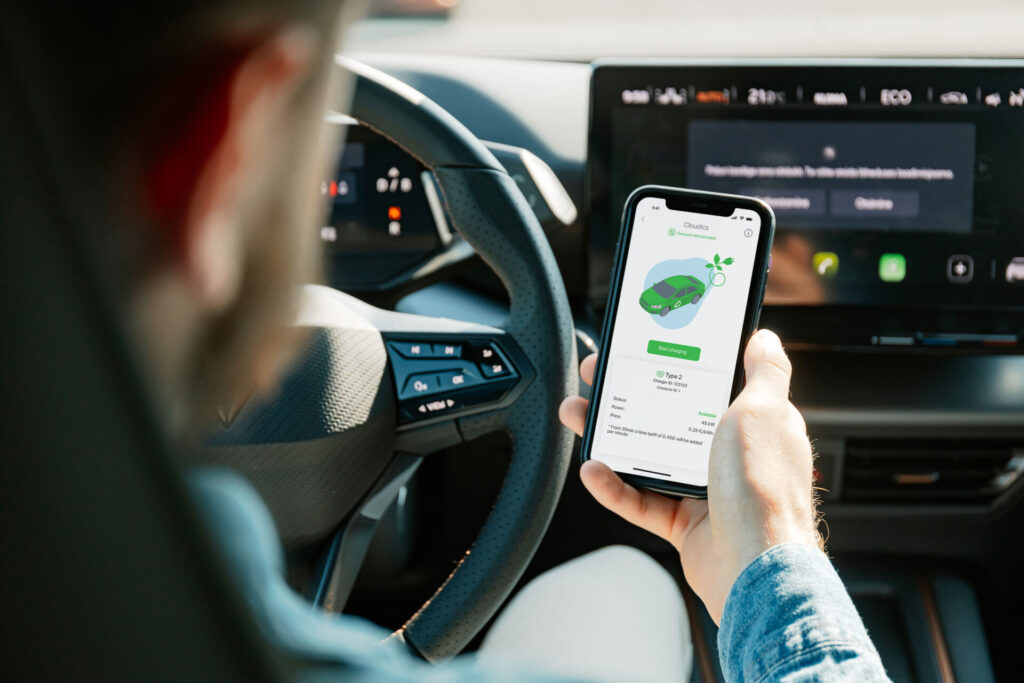
To deliver a nearly perfect experience, retailers must provide multiple payment methods aligning with various customer journeys and preferences.
The challenge? Each customer has a unique journey. The key to driving profitability is connecting services on a single platform, enabling control over the customer experience. This is why a connected retail infrastructure is essential—one that offers flexible payment options and allows customers to switch seamlessly between them.
Picture a customer approaching an EV charging hub or highway energy station. Maybe they’re seeking a drive-in experience, complete with an app-ordered meal. Or perhaps they’re just looking for a quick charge and need an easy credit card payment via the eOPT.
For those in a hurry, the option to skip the line at a self-service checkout or grab a quick coffee, whether through a subscription or as a loyalty reward, can make all the difference.
The focus isn’t on technology but on meeting the needs of every customer journey with the highest level of service. At its core, these are just the tools that enable us to gain deep insights into customer preferences and behaviours.
The question is how to ensure operations are open and adaptive enough to serve everyone effectively?
The Cloudics platform is designed with the entire retail experience in mind, covering everything from multi-fuel energy stations to shopping, unlocking a world of possibilities.
Today, you can integrate a wide range of services, transforming your energy station into a convenient hub for your community.
These services include everything from mobile-based trailer rentals and smart locker gas-bottle exchanges to food ordering and subscriptions.
With Cloudics, you can deliver frictionless shopping, convert non-IoT devices into mobile-enabled assets, automate on-site accommodation for long-distance drivers, and much more.
Regarding any questions, contact us:
info@cloudics.com
+372 628 0000
Cloudics
Future of Cloud-based Solutions
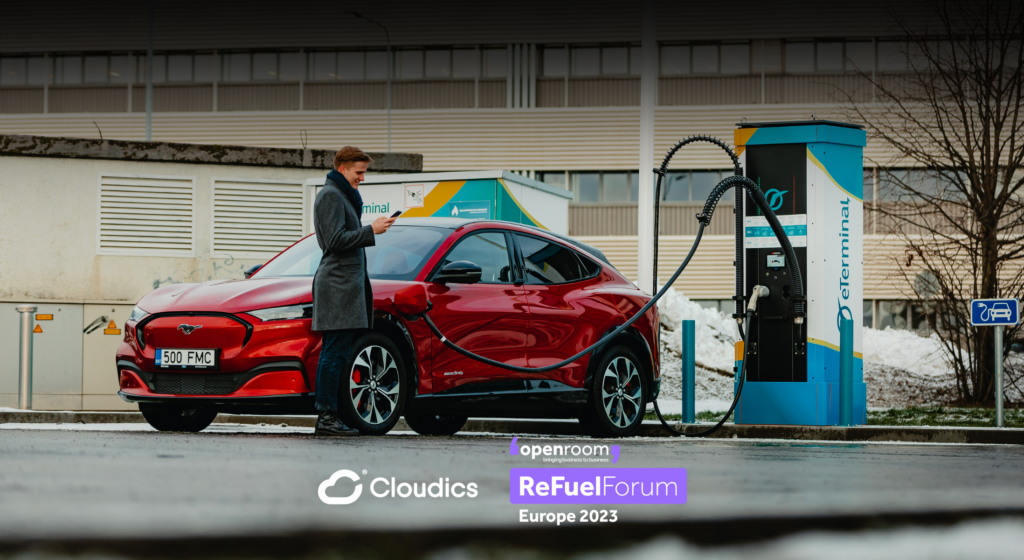
ReFuelEurope by OpenRoom is a high-energy networking and industry collaboration event.
It is a gathering consisting of pre-arranged one-on-ones, informal networking and lively debates led by key figures in the industry. The event aims to give a 360-degree overview of what’s needed to take your business forward in the fuel industry.
We are happy to announce that Cloudics International Sales Director, Gary Szendielarz, will represent our company and provide unique insights into our cloud-based platform.
Here are some thought-provoking ideas you hadn’t probably considered when evaluating Cloudics as a business platform.
Loe rohkem