
Accurate, timely data powers precise pricing that responds to market shifts and competitor moves. It informs smarter decisions on where to open, close, or remodel locations. It drives optimised inventory, reduced fuel loss, and better in-store assortments. In short, data is the foundation for profitable, agile operations across a multi-site network, and it simply defines how to respond to micro-shifts in market demand.
Today, artificial intelligence makes even better decisions possible, and more attainable than ever. AI can forecast demand, recommend dynamic pricing, identify high-potential sites, and even link fuel and convenience sales patterns for cross-category optimisation. Imagine defining how to setup a location based on up to the minute information. Yet for many operators running regional or national networks, a critical gap remains: most site systems simply cannot deliver fresh, reliable data that modern Big Data and AI demands.
Legacy on-premise technologies, built for an earlier era, often mean data arrives in batches, sometimes days late. Real-time sharing is rare. Manual processes and siloed systems create friction at every step. Technology providers sweating the assets mean that extracting filtered, accurate data can be cumbersome at best, impossible more likely. The result? Operators are trying to fuel high-performance AI engines with outdated or incomplete information. They’re trying to leverage huge amounts of historical bad big data, unwittingly responding to a problem that no longer exists.
If you’re responsible for dozens, hundreds or even thousands of locations, you already feel the downstream effects:
In an industry where fuel margins are under pressure and convenience sales must offset volatility, these lags aren’t just technical annoyances. They translate into lost revenue, inefficient capital allocation, and a competitive disadvantage against more agile players who have bridged the data gap.
The pace of change in fuel and convenience retail continues to accelerate. Competitors are using integrated data platforms to link fuel and in-store performance, enabling smarter cross-promotions and unified pricing strategies. External data, competitor pricing, local demographics, weather, and mobility trends, is being layered in to create hyper-local insights. AI-driven tools now support real-time operational decisions, from predictive maintenance on pumps to automated inventory replenishment.
Operators who can access near-real-time data from their sites gain a clear edge: faster pricing responses, more accurate site selection, reduced fuel loss through better reconciliation, and the ability to treat each location as a unique profit centre rather than an average across the network.
Those stuck with multi-day delays risk falling behind. In a world where prices can shift multiple times daily and customer behaviour evolves rapidly, decisions based on outdated snapshots quietly erode profitability.
The good news is you don’t need a full rip-and-replace of every legacy system to make meaningful progress. Many successful operators are bridging the gap with targeted, pragmatic steps:
Operators who follow this path often see quick wins. For example, reducing data lag from days to hours can unlock more responsive pricing strategies and better linkage between fuel volumes and in-store promotions. Over time, this creates the clean data foundation that lets AI deliver on its promise rather than adding complexity.
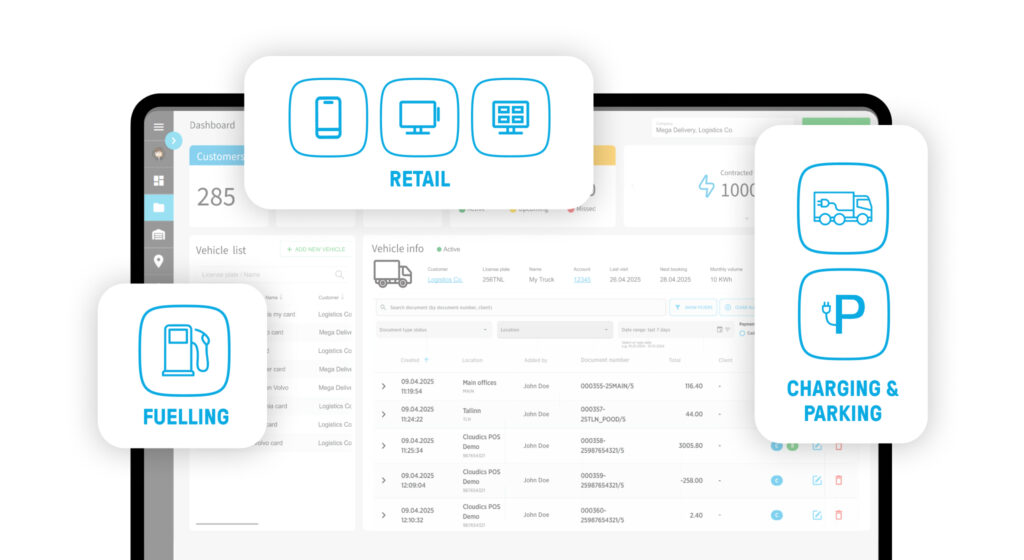
For operators ready to move beyond incremental bridges, fully cloud-native platforms offer a more comprehensive solution. One such platform is Cloudics, purpose-built for fuel, EV, and convenience retail.
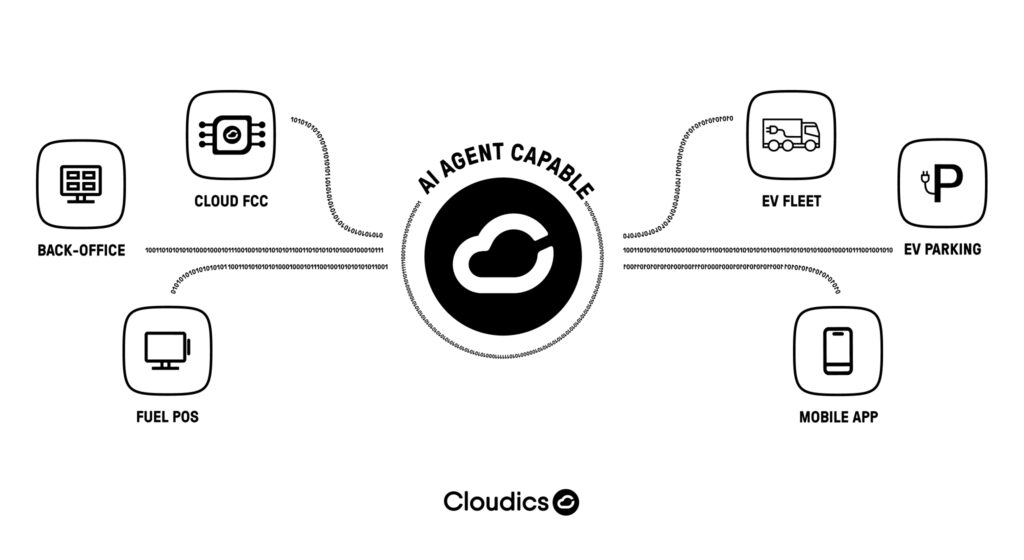
Cloudics is designed as a unified cloud platform that connects fuelling, EV charging, car washes, and retail operations, and more, into a single ecosystem. All core products, including the Point of Sale (POS), OPT/forecourt controller, EV, mobile application, and supporting back-office tools, are cloud-native from the ground up.
This architecture delivers several key advantages that directly address legacy limitations:
Cloudics is also being actively readied for the Model Context Protocol (MCP), an emerging open standard that enables AI agents to securely connect to external systems, access real-time context, and perform actions more efficiently. This preparation will further simplify and standardise how operators plug Cloudics data into advanced AI workflows, making intelligent automation even more seamless and future-proof.
By replacing fragmented legacy systems with a single cloud-native environment, or even just augmenting them, removing their limitations, Cloudics eliminates many of the chokepoints that delay data and compromise integrity. Operators gain the ability to act on fresh insights, respond faster to market changes, and fully leverage AI for competitive advantage, while maintaining simplicity in daily operations.
Data will continue to define success in fuel and convenience retail. The difference between thriving and merely surviving lies in how effectively you can extract, validate, and activate that data, especially as AI becomes a standard tool for decision-making.
Legacy systems don’t have to be a permanent barrier. Whether through pragmatic integration steps or a strategic shift to cloud-native platforms, multi-regional operators can move from delayed batches to actionable, timely insights.
The question isn’t whether data will shape your network’s future. It’s whether you’ll give your data the speed, integrity, and accessibility it needs to power better pricing, smarter location strategies, and truly intelligent operations in an AI-enabled world.
The operators who treat data infrastructure as a strategic priority today, rather than a technical afterthought, will be the ones confidently navigating volatility, optimising every site, and capturing new opportunities in the years ahead.
Come by to see some of these capabilities firsthand at UNITI expo 2026 in Stuttgart (19–21 May). Visit us at Booth 5D61, where we will be demonstrating the power of the Cloudics platform, the next-generation version of our innovative Cloud FCC (cloud-based forecourt controller), and the first Truck Parking Management system truly designed around the specific limitations and needs of electric trucks.

Contact us
info@cloudics.com
+372 628 0000
Cloudics
Here to Streamline Your Business
Transform any physical or digital touchpoint into an instant conversion driver.

Gamification can be used in mobile app, in-store POS, SCO, and many more.