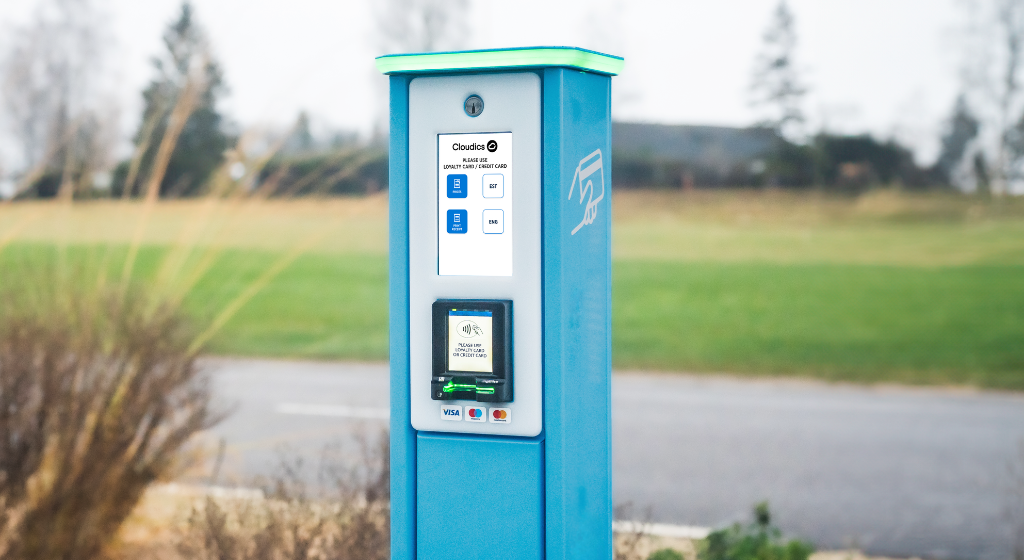
Modern service locations often offer more than one service. Customers may be able to charge an EV, refuel, park or use a car wash at the same site.
As the number of services grows, managing their payments and customer journeys becomes increasingly complex.
Cloudics Flow & Pay solves this by connecting physical payments and service control into one always-online solution.
Adding a new service traditionally means adding another isolated payment terminal.
Over time, the site becomes a fragmented collection of separate, disconnected systems. This results in more hardware to maintain, complex integrations, and a frustrating customer journey.
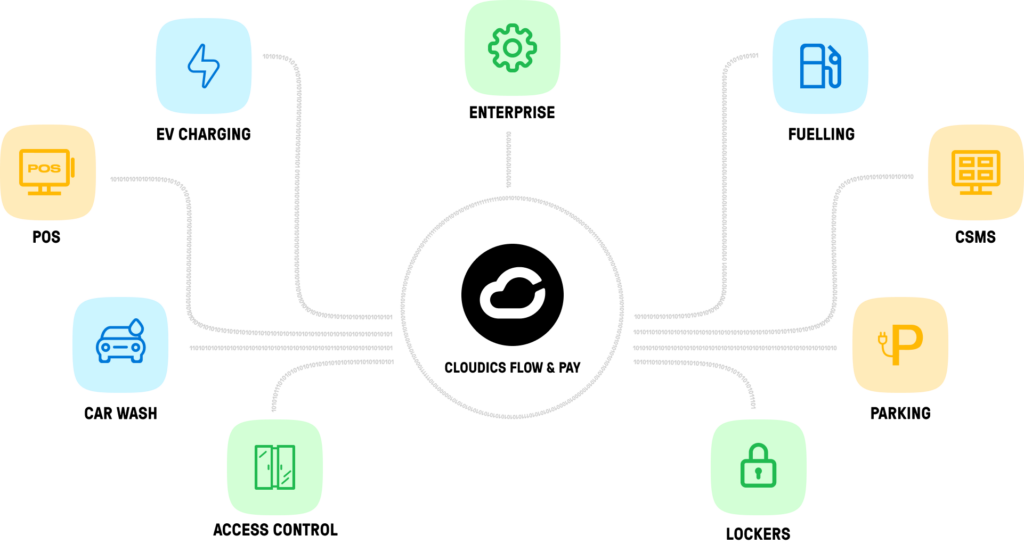
Cloudics Flow & Pay brings multiple services into one shared payment point. Customers can select and pay for EV charging, fuelling, parking, car wash, access, lockers and other unattended services.
This reduces the need to build a separate payment journey for every service.
Applications and customer accounts can be useful for regular users, but they should not be the only way to access a service.
Imagine a driver who stops at the location for the first time and only wants to use one service. They want to select the charger, fuel pump or car wash and pay directly with a bank card or mobile wallet. Without the hassle of downloading an app, creating an account or entering payment details before being able to continue.
A returning customer, on the other hand, uses a mobile app or loyalty account. Their preferred payment method is already saved, and they can receive personalised prices, loyalty benefits or relevant offers during the transaction.
Another example is a company driver, who identifies themselves with a fleet card or business account. The payment is linked to the company’s agreed pricing and reporting process, making it easier to centrally manage transactions and invoices.
Cloudics Flow & Pay allows all of these journeys to operate side by side, so each customer can use the payment method that best fits their situation – whether it’s an app, a personal or business account, or paying directly with Visa, Mastercard, Apple Pay, or Google Pay.
The need for straightforward payments is particularly apparent in public EV charging.
Drivers should be able to select a connector, understand the price and begin charging without registering or entering into a subscription. AFIR payment requirements have made this an important consideration when operators install or upgrade public chargers.
One approach is to add a separate payment terminal to every charger. At a larger charging hub, however, this also increases the amount of hardware that needs to be installed, connected and maintained.
Cloudics Flow & Pay allows several chargers or connectors to be managed from one shared payment point. The same terminal can also support parking, car washing or other services at the location instead of being reserved for EV charging alone.
A large multi-energy hub and a smaller unattended service point do not have the same requirements. Cloudics Flow & Pay is therefore available in three main configurations.
eOPT Pro includes a touchscreen for locations with several services or more detailed customer journeys.
eOPT Lite provides a more compact option for simpler environments with only a minimalistic payment terminal screen.
Standalone Flow & Pay runs directly on compatible payment terminal hardware and can be integrated into an existing structure, device or service environment.
The hardware can be selected based on the location instead of forcing every site into the same setup.
Introducing a new payment experience can become expensive if it requires operators to replace infrastructure that is still working.
Cloudics Flow & Pay connects the payment with the system delivering the service. Depending on the project, it can be integrated with EV charging management systems, fuel dispensers, forecourt systems, parking platforms, car wash equipment, access control and loyalty solutions.
This makes it possible to improve the customer journey while continuing to use suitable existing equipment and backend solutions.
The solution can also work as part of the wider Cloudics platform alongside the Cloudics Forecourt Controller, POS, self-checkout, and mobile application.
Many charging hubs, parking facilities, car washes and other service points operate without permanent staff.
When something changes, such as a price, service option or payment flow, updating every location separately takes time. Operators also need visibility into what is happening at sites they cannot constantly supervise in person.
Because Cloudics Flow & Pay is cloud-based, services and customer journeys can be managed centrally. Operators can update settings, manage services and monitor transactions across multiple locations without relying entirely on separate local systems.
Customers receive their receipts through a QR code or by email, removing the need to maintain receipt printers at unattended sites.
Consolidating your site’s payment architecture under Cloudics Flow & Pay delivers major financial and operational advantages over fragmented, vendor-specific solutions.
This unified, cloud-managed infrastructure directly reduces expenses across three critical areas.
Lower
CAPEX
Instead of buying separate payment terminals for every individual EV charger, pump, or car wash bay, operators can route multiple services through
a single shared payment point. This drastically minimises the upfront hardware investment required to build or upgrade a location.
Reduced operational and maintenance costs
Fewer physical terminals mean fewer hardware components prone to failure, lowering ongoing maintenance costs. Additionally, by replacing physical paper receipts with digital alternatives via QR codes or email, operators eliminate recurring paper expenses and printer-related mechanical downtime at unattended sites.
Simplified integration management
Managing multiple disjointed payment flows and vendor integrations creates administrative friction. Cloudics Flow & Pay provides a single connected environment that handles transactions centrally. This reduces the time and resources spent managing siloed local systems, allowing your business to expand efficiently as new services are introduced.
The main challenge is not simply accepting a card payment. It is connecting the payment with the correct service while keeping the process understandable for the customer and manageable for the operator.
Cloudics Flow & Pay provides a shared payment layer for locations where several services, devices and systems need to work together.
Instead of adding another isolated terminal each time the business develops, operators can use one connected payment environment that can expand with the location.
Contact Cloudics to find the right Flow & Pay setup for your location
info@cloudics.com
+372 628 0000
Cloudics
Here to Streamline Business

The transformation underway in road freight movement is not merely technological; it marks a fundamental shift in how logistics companies think about energy, infrastructure, and operational efficiency. Across Europe, pressure to act is rising from two directions: regulation and economics.
Organisations in two key industries, energy supply and logistics, that adapt most quickly will define the competitive landscape over the decade ahead.
For years, Cloudics has focused on developing innovative operating systems for fuelling stations and emerging multi-energy hubs. What we now see is a clear turning point; the traditional concept of “refuelling” is dissolving, and in its place emerges a multi-energy ecosystem where electricity, hydrogen, biofuels, and data all move in sync.
Road transport will no longer rely on a single dominant energy carrier (e.g., diesel) but on the synergy among several. And success will depend not only on building this infrastructure and integrating new vehicles into the operations, but on ensuring that every part of it can communicate, coordinate, and scale.
The land transport industry generates roughly a quarter to a third of Europe’s CO₂ emissions. Governments are responding with stricter regulations and ambitious timelines, supported by funding mechanisms designed to accelerate infrastructure rollout.
For example, European transport ministers recently underlined the urgency by calling for the rapid deployment of charging corridors capable of supporting heavy-duty electric vehicles. By 2030, more than 400,000 zero-emission trucks are expected on European roads, and the infrastructure must not become the bottleneck.
Yet the forces reshaping logistics are not solely regulatory.
The economic case for change is becoming more compelling by the month. Electric vans already outperform diesel-powered vans on certain routes from a total cost of ownership perspective. Every logistics operator understands that if today’s cost structure fails to evolve, tomorrow’s competitiveness will disappear. The green transition is becoming a financial inevitability.
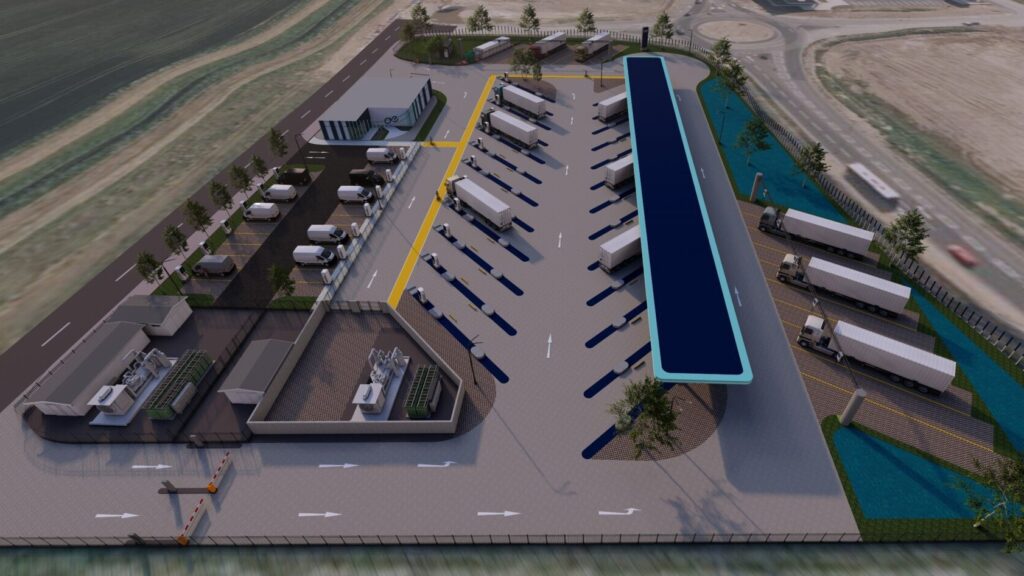
As a result, two complementary models are beginning to structure the future of freight energy. The first is public multi-energy infrastructure designed to give logistics operators confidence beyond the depot gates.
Companies like Aegis Energy in the UK are building stations that combine high-power electric charging with hydrogen, biogas and biodiesel, creating what is essentially “fuelling 2.0” for commercial transport. Aegis, a Cloudics partner, aims to cover the UK with 30 such hubs by 2030, supported by £100 million in recently raised investment.
Their value proposition is simple yet powerful. No logistics manager should have to worry about range, access to energy, or service continuity on long-haul routes. The industry is buying not only energy but certainty.
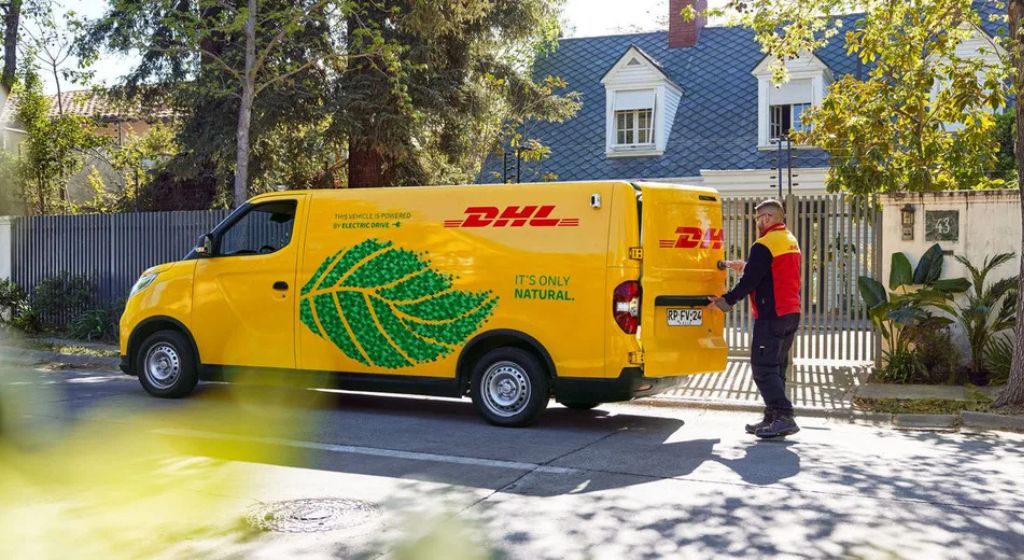
The second model of the privately operated depot runs in parallel. Transport companies with predictable routes and vehicles that return nightly increasingly see depot charging as a strategic asset.
DHL, a pioneer with more than 40,000 electric vehicles in their fleet worldwide, exemplifies this shift. Charging during operational downtime, i.e. overnight or during loading, allows companies to use the cheapest electricity, protect battery health and control one of the most critical cost inputs in logistics.
What matters here is not charging speed but reliability, optimisation and full readiness at the start of each workday.
The real breakthrough will come when these two models are integrated through technology.
Imagine a logistics ecosystem in which public hubs share real-time availability with transport management systems, and high-power charging can be booked automatically based on route planning. At the same time, depot systems plan their load intelligently, ensuring vehicles are fully charged while electricity costs remain minimal.
This is not simply cleaner transport. It is transport that operates with greater precision, predictability and commercial efficiency.
Such coordination requires a new technological architecture. Traditional on-premise station software cannot support the complexity of multiple energy carriers, dynamic pricing, distributed assets and cross-system communication. The future is cloud-based, modular and always online.
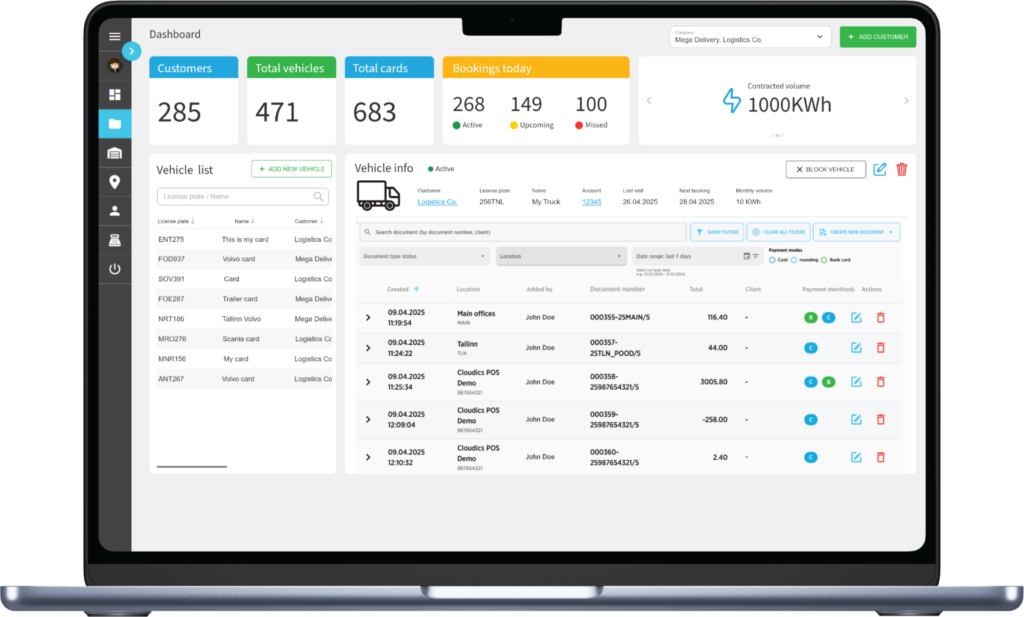
This is the role Cloudics plays as the technology link, providing an integrated platform through which both infrastructure operators and logistics companies can manage their assets, data flows, pricing, access control, and payments in a unified way.
Aegis can remotely operate their multi-energy stations; DHL can manage their depot network with real-time oversight and automated reporting. And when their systems need to interact, Cloudics enables seamless data exchange and consolidated visibility.
Technology becomes the connective tissue that transforms many moving parts into a functioning ecosystem.
Green fuels in road transport are no longer a futuristic vision – they are an operational reality.
But the transition will succeed only if the three strategic components evolve together: public infrastructure that provides confidence on the road, private depots that ensure operational efficiency, and flexible technology capable of orchestrating the complexity between them.
The companies that master this new logic will not simply comply with regulation; they will redefine what competitiveness in logistics means in the next decade.
Learn more about Cloudics EV charging platform >

Tõnu Mets
Head of International EV Sales
+372 51 15 236
tonu.mets@cloudics.com
Cloudics
Here to Streamline Business
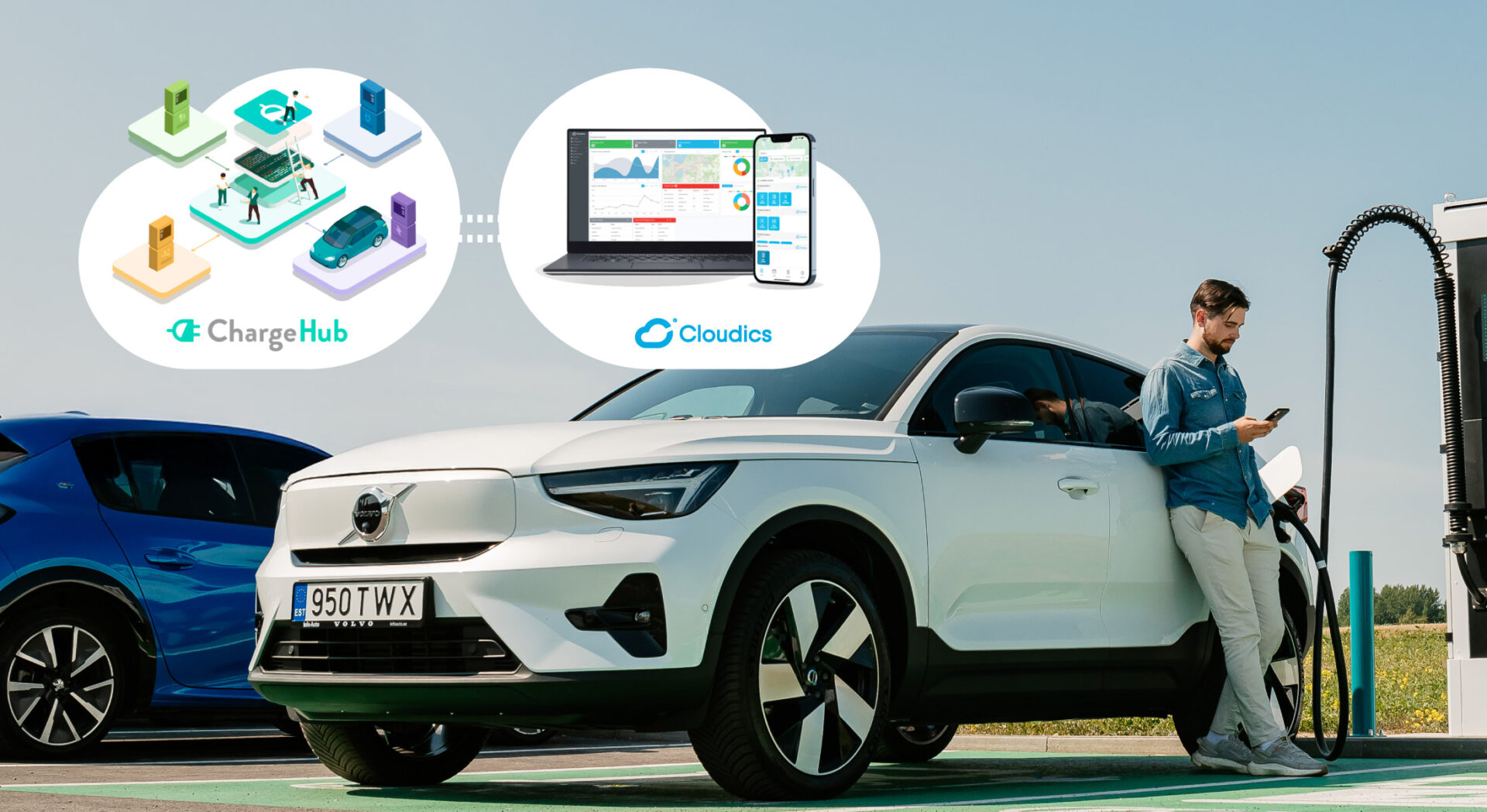
Cloudics is thrilled to announce a collaboration between ChargeHub, the leading EV roaming hub in North America, and Rezzo, a white-labelled platform powered by Cloudics technology serving Canada and North America.
Through this collaboration, all Rezzo EV chargers are now integrated into ChargeHub’s Passport roaming hub, enhancing accessibility and encouraging greater use of Rezzo charging stations.
This partnership also opens up the Rezzo charging network to e-mobility service providers (eMSPs), expanding their range of available charging options.
Rezzo’s charging network is now fully integrated with ChargeHub’s roaming platform, which includes more than 120,000 charging stations across the region.
ChargeHub’s extensive network, with over 150 roaming connections, covers over two-thirds of CCS and J1772/Type 1 chargers in the U.S. and Canada, which means the chargers are now accessible to over one million ChargeHub users and countless eMSPs.
“Partnering with ChargeHub has enabled us to enhance accessibility for millions of EV drivers while supporting charge point operators (CPOs) with greater visibility, simplified payment process and increased operational efficiency,” says Triin Tobi, Head of EV Charging at Cloudics.
Offering charging possibilities in all regions through one payment platform makes driving an EV a seamless and enjoyable experience.
The integration eliminates the need for EV drivers to manage multiple apps.
Chargers on the Rezzo network can now be accessed, and sessions can be paid for using familiar processes available through the ChargeHub native app or eMSP partner applications, streamlining the charging experience.
ChargeHub, North America’s leading EV roaming hub, continues to set the benchmark for coverage and reliability.
“We’re thrilled to offer enhanced visibility to all CPOs utilizing the Rezzo platform,” said Keven Fortin-Simard, Managing Director of Rezzo. “This partnership not only improves charger utilization but also opens new revenue streams for operators, ultimately benefiting drivers and the entire e-mobility sector.”
By combining the strengths of ChargeHub’s extensive network and Rezzo’s innovative platform, the partnership paves the way for a more connected, efficient, and user-centric EV charging experience.
Keven added, “We’re excited to take energy stations to the next level, integrating new possibilities that will shape a brighter future for EV charging.”
Cloudics is committed to transforming energy station operations, increasing retailers’ profitability, and making payments as convenient as possible for customers worldwide. Launched in 2021 as a white-label platform powered by Cloudics, Rezzo brings innovative cloud-based solutions to energy stations across Canada. In a remarkably short time, Rezzo has gained traction in the market, earning the trust of Canadian retailers.
Learn more about Cloudics EV platform here or set up a demo here.
Cloudics
Future of Energy Stations
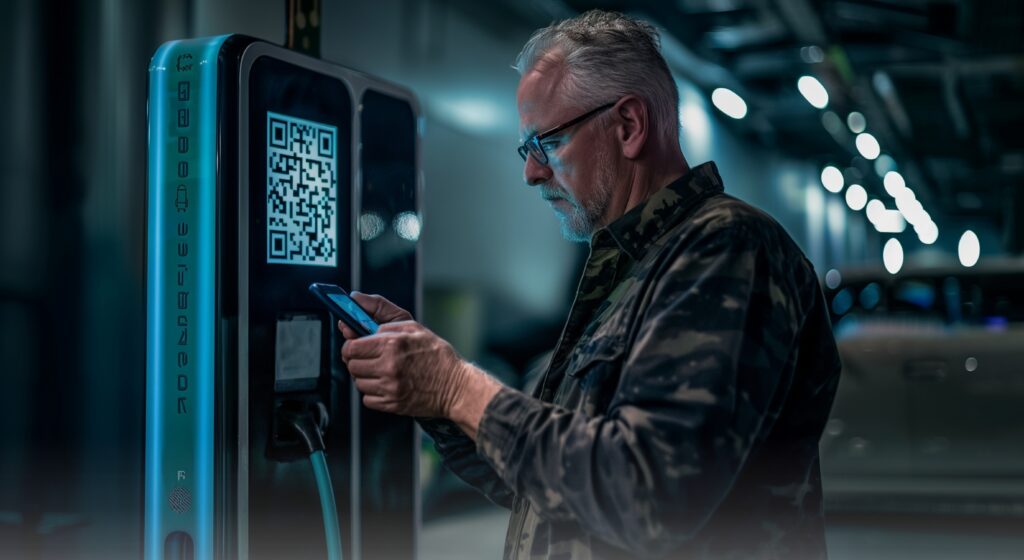
QR codes are fiddly, need the right light, and can be damaged easily. QR payments on pumps or chargers seem like a good thing until someone gets bored while fuelling or charging and thinks it is funny to peel them off.
Loe rohkem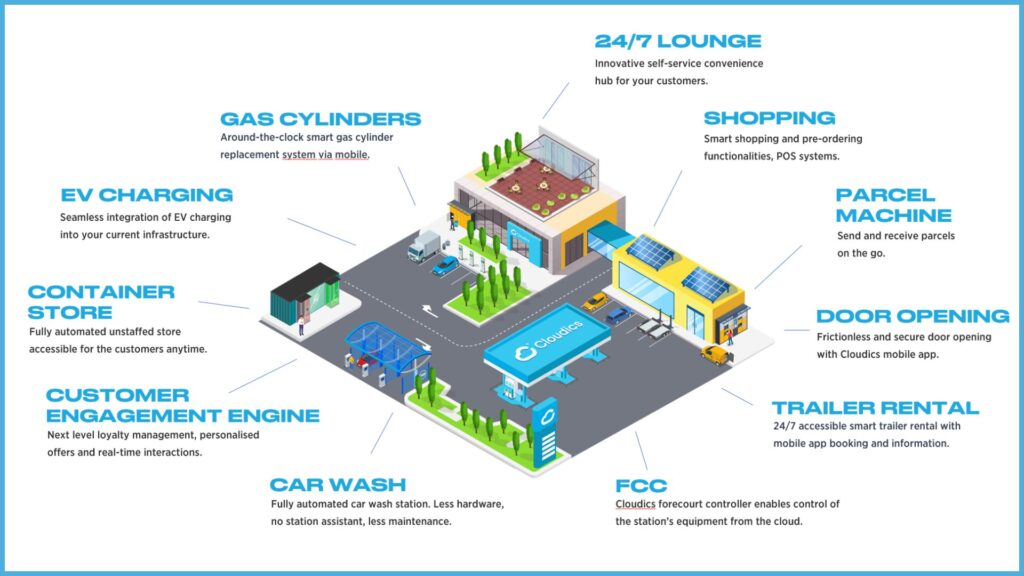
While big energy retailers can afford to trial and error new innovations and shifts to business operations, small and medium retailers struggle to make ends meet with changing fuel margin dynamics in an ever-changing world. Cloudics aims to resolve those challenges without investing in new on-site technology.
The Cloudics platform enables retailers to turn out-of-date fuel stations into holistic energy hubs at a pace of their choosing.
By integrating operations across self-service convenience, EV charging, fuelling, and car wash services into a central cloud-based platform, retailers can select how they wish to adapt their business to changing demands.
Thanks to Cloudics, we can convert legacy equipment into cloud-driven IoT devices. This means your customer reach and upsell options grow exponentially, but it also prolongs the lifespan of legacy equipment.
At Uniti Expo 2024 in Hall 5, Booth D61, we are excited to demonstrate how our software and hardware solutions contribute to a connected energy station ecosystem.

A lot has been said about frictionless technologies for hopping, and whilst retailers are looking at ways to simplify this business and relieve staffing issues, we are all aware of the news around just-walkout technologies and their failures.
Cloudics shopping is going back to the root of the problem to help enable unmanned operations or 24/7 operations during off-peak hours.
Our frictionless entry/exit solution is already in use today, but rather than using the expense and unproven AI technologies to track sales, we leverage self-checkout or mobile scan and pay.
In addition, with our new radar-based security, we can track customer behaviour in-store and warn retailers to check camera systems for spurious behaviour.
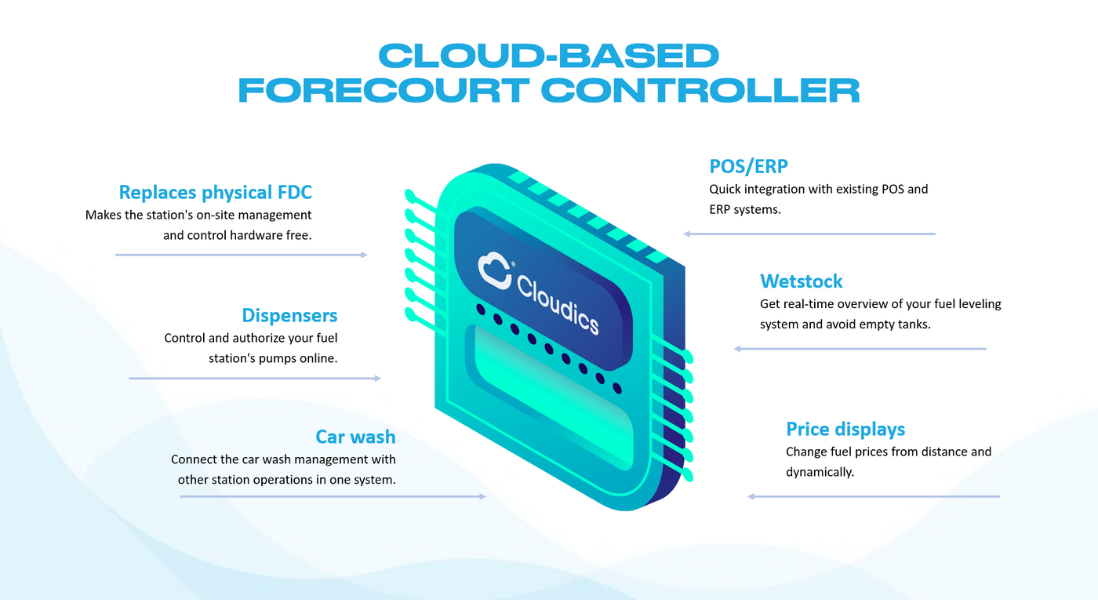
Our innovative cloud-based forecourt controller already empowers fuel retailers to effortlessly connect station equipment and devices to the cloud.
It has been in use for over five years and is still going strong. With the constant addition of new dispensers, our solution is ready to go for markets worldwide, and we are now entering new markets in Asia.
With Cloudics FCC, all the forecourt equipment (dispensers, wetstock, price displays, car wash—all become IoT devices) can be managed from the cloud, enabling instant access to control and manage all your station devices remotely without being on-site.
Cloud-based Forecourt Controller reduces operational costs by a huge margin, centralising control and management of the forecourt in a way that cannot be achieved with a physical device. It also simplifies fuel bunkering, keeping a real-time view of B2B tanks and containers at non-public locations.
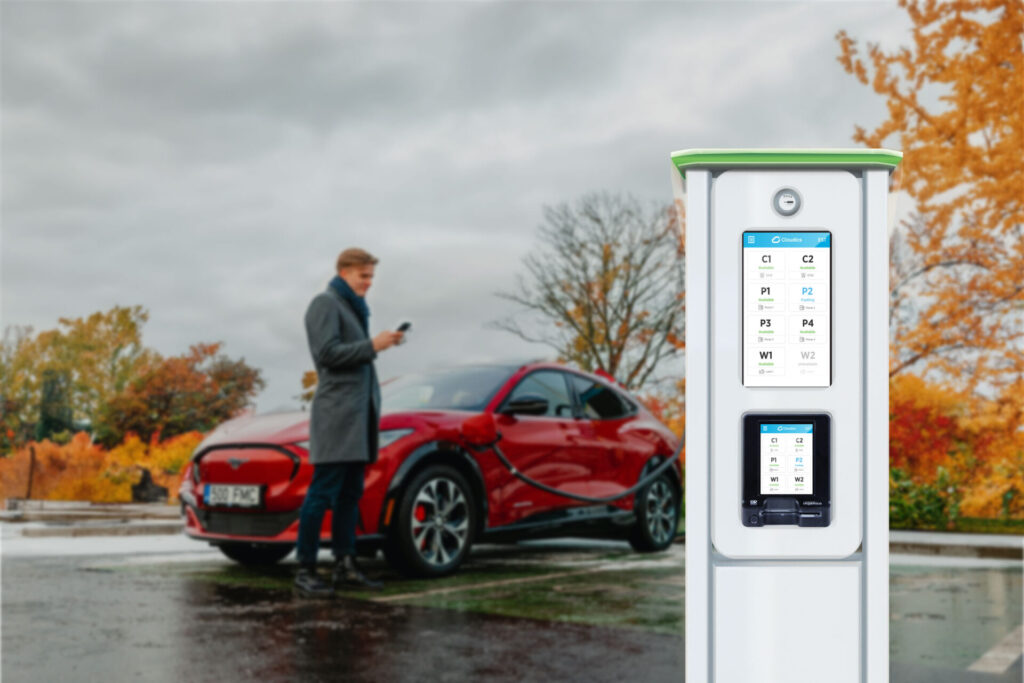
In response to the growing demand for electric vehicle (EV) infrastructure, we proudly present our newly developed eOPT specifically for EV charging.
It has been integrated with our all-in-one mobile payment app and a versatile Charging Station Management System (CSMS) supporting over 30 charger manufacturers.
Cloudics platform for EV charging is a low-cost way to quickly fulfil payment regulations for the EU and bring additional services to the OPT, such as car washes, parking, vacuum cleaners, vending machines and more.
Read more about Cloudics for EV charging here.
Whilst many retailers have invested in an app over the past decade, it is now becoming increasingly clear that just like a POS solution, customer apps require investment and planning.
The Cloudics app consolidates all aspects of the energy retail experience, from EV charging and frictionless entry to fueling, subscription-based services, shopping, food, engaging gamification features, and so much more.
Come talk to us about how you can use the app to surprise and delight your customers, driving increased revenue and converting fuel-only customers to loyal shoppers.
Cloudics stands at the forefront, driving innovation as the energy landscape shifts. Our focus is ensuring retailers are ready for the next generation of fuel and convenience retail, no matter which direction the industry goes.
At Uniti Expo 2024, we will be unveiling current and latest innovations, with the goal of transforming fuel stations into comprehensive energy hubs, without the huge expense of equipment upgrades.
Our journey spans over 26 years, during which we have achieved significant milestones, including deploying our platform and solutions across multiple regions such as Canada, the Baltics, the EU, and Georgia.
With over 550 stations operating on our platform and more than 200,000 users worldwide, our global footprint is a testament to our expertise and the trust placed in us by our partners.
We invite you to experience the future of fuel retail firsthand at Uniti Expo 2024, Hall 5, Booth D61.
Let’s embark on this journey towards a more efficient, sustainable, and consumer-friendly energy landscape.
Regarding any questions, contact us:
info@cloudics.com
+372 628 0000
Cloudics
Future of Energy Stations

As electric vehicles (EVs) continue to grow in popularity, understanding the nuances of EV charging technologies becomes crucial. Two terms often heard in the EV charging conversation are Autocharge and Plug & Charge. While they might seem similar at first glance, they are different technologies with unique features and benefits. Let’s demystify these terms.
Loe rohkem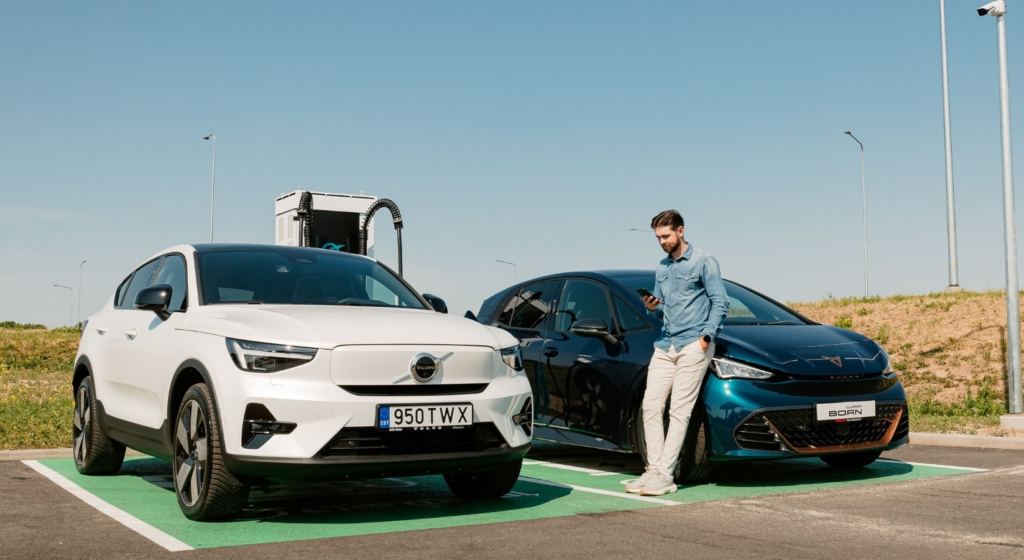
Cloudics management and payment platform for EV charging and energy stations has been successfully integrated with the Eco Movement data platform for a more convenient charging experience.
Loe rohkem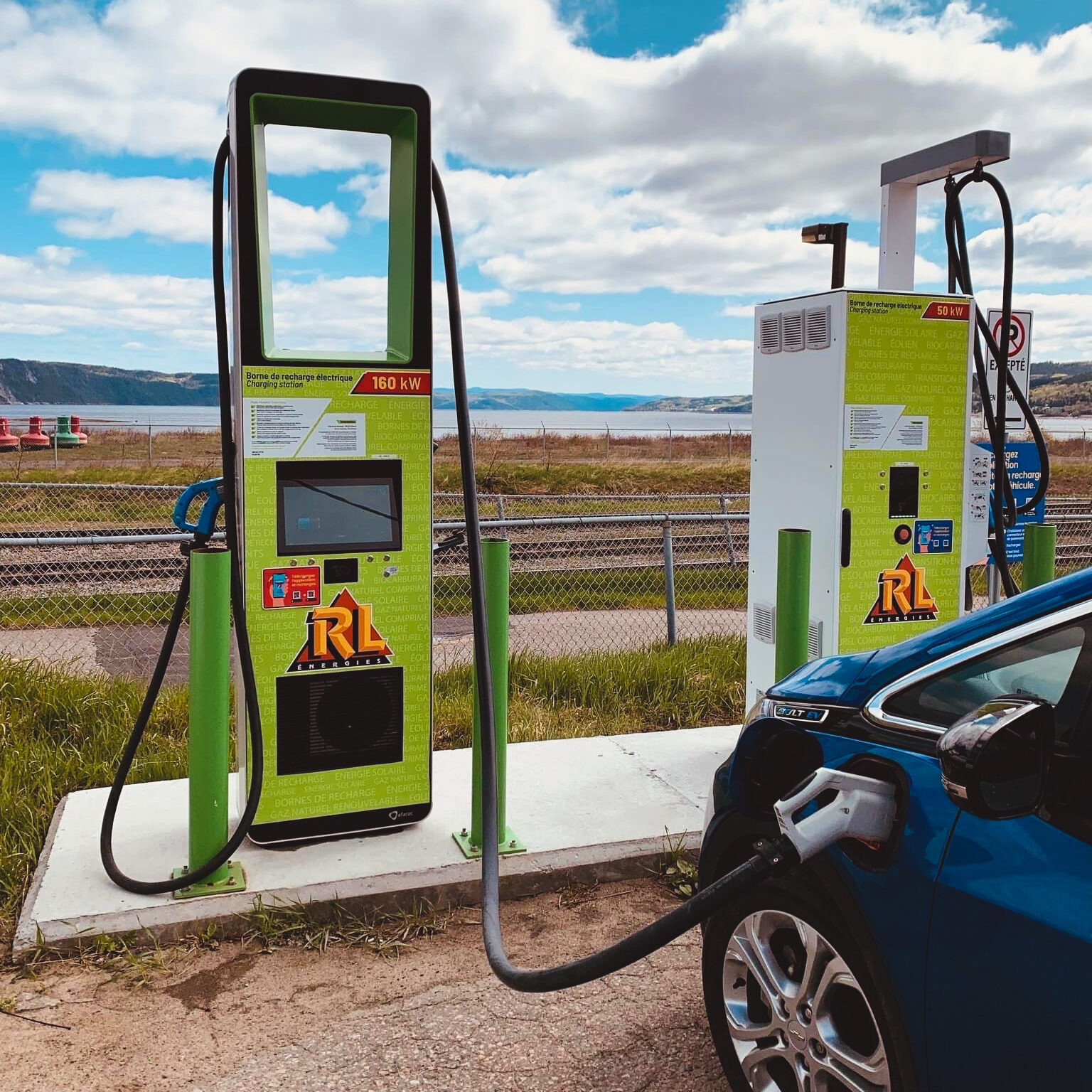
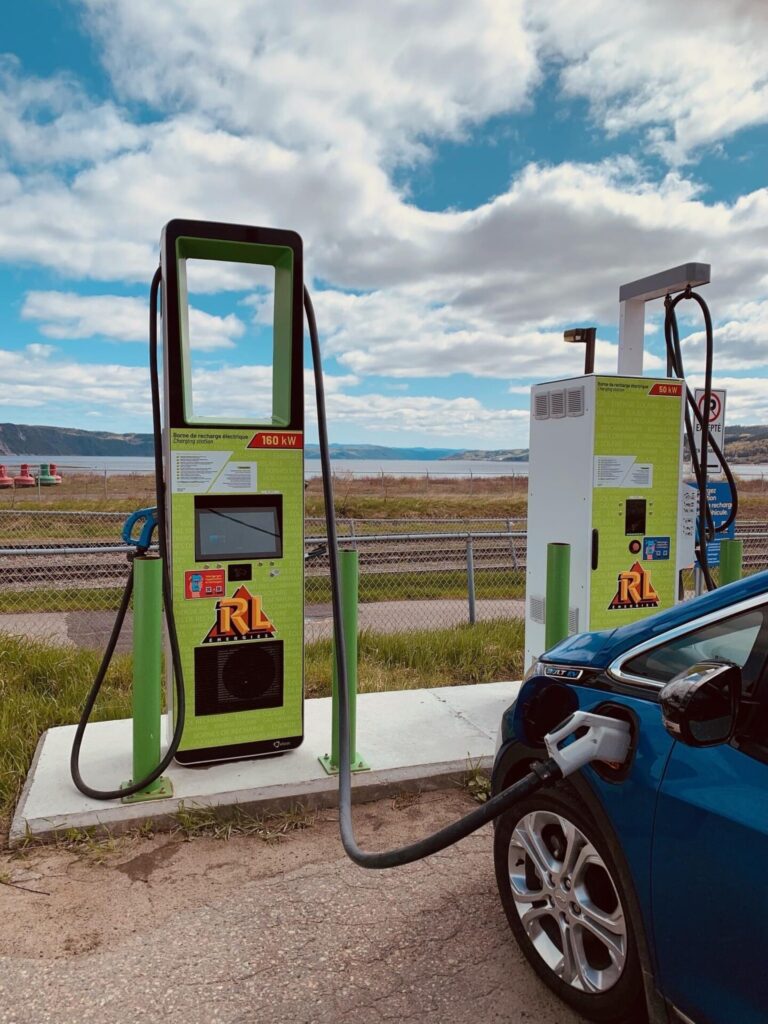
May 2023 marks a milestone for Cloudics & Rezzo collaboration. Phase 1 deployment of the RL Energies charging network in Quebec, Canada, has been completed. A 12-month journey of hard work has paid off, and 20 EV chargers across RL Energies and Belzile energy stations have been set up, with 10 of them being ultra-fast (160kW) and other 10 fast 50kW charging points.
Loe rohkem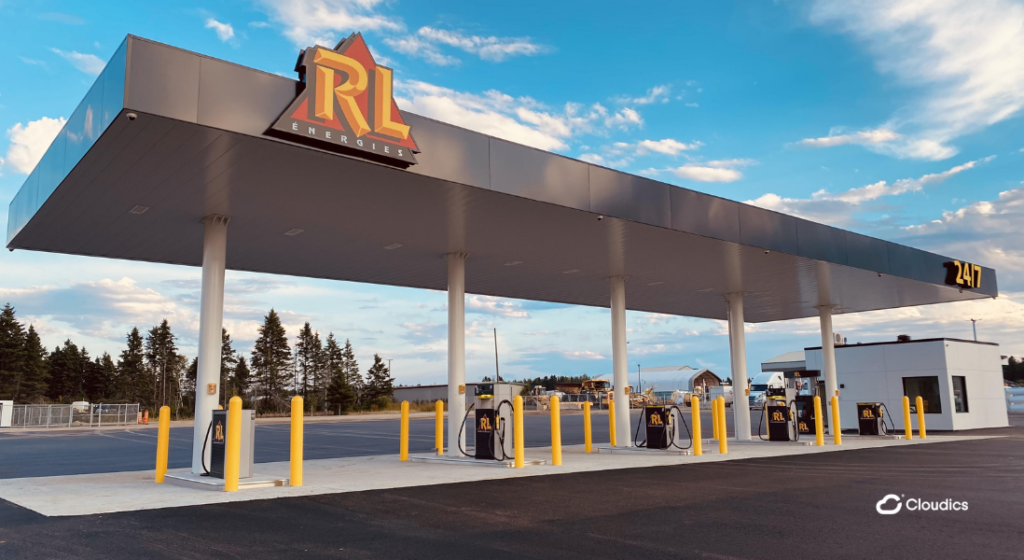
In the second half of 2021, Cloudics, a cloud-based platform for energy station management and payments, entered the 9th largest economy in the world.
A white-label solution was established with local Canadian brand Rezzo to offer the Cloudics platform for energy stations in Canada. In just a matter of months since its market debut, Canadian RL Energies, became the first company to utilise the innovative platform.
Loe rohkem